Refresher Course: Breast
RC 302 - Challenging cases: how we do it
Lectures
1

Chairperson's introduction
05:00Fleur Kilburn-Toppin, Cambridge / UK
2
Second-look ultrasound after abnormal contrast imaging: when and how?
15:00Elisabetta Giannotti, Cambridge / UK
3
Pre-surgical localisation of the breast and axilla: wire and non-wire techniques in practice
15:00Tamar Sella, Jerusalem / IL
4
Breast lesions of uncertain malignant potential (B3 lesions): current strategies in assessment and management
15:00Simone Schiaffino, Lugano / CH
5
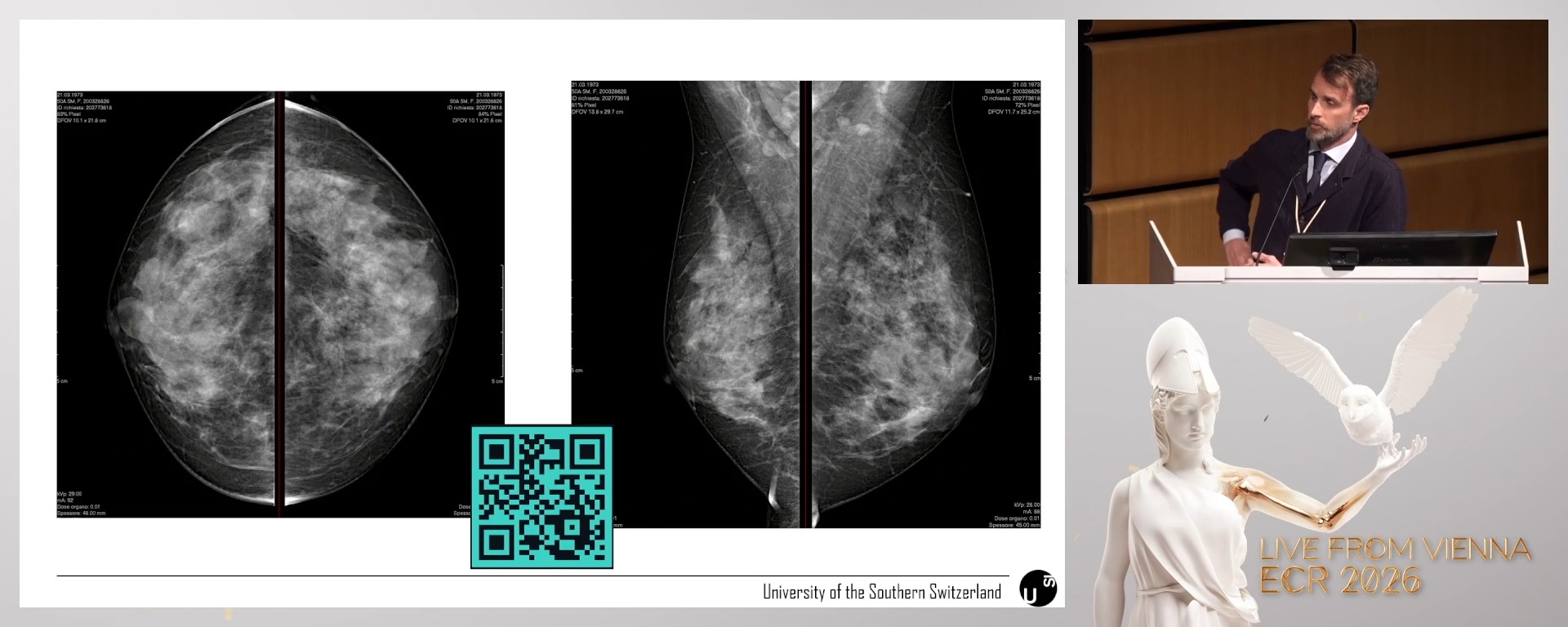
Panel discussion: When the guidelines end: navigating grey zones in breast imaging
10:00Panel discussion: When the guidelines end: navigating grey zones in breast imaging
5 min
Chairperson's introduction
Fleur Kilburn-Toppin, Cambridge / United Kingdom
15 min
Second-look ultrasound after abnormal contrast imaging: when and how?
Elisabetta Giannotti, Cambridge / United Kingdom
- To recognise when second-look ultrasound is justified after abnormal findings on contrast-enhanced imaging.
- To identify common challenges and pitfalls in correlating enhancing lesions with ultrasound targets.
- To apply practical strategies to improve lesion detection and guide intervention.
15 min
Pre-surgical localisation of the breast and axilla: wire and non-wire techniques in practice
Tamar Sella, Jerusalem / Israel
- To compare wire and non-wire localisation options for complex breast and axillary cases.
- To recognise key technical challenges in difficult localisation scenarios.
- To tailor localisation strategies to surgical planning and lesion characteristics.
15 min
Breast lesions of uncertain malignant potential (B3 lesions): current strategies in assessment and management
Simone Schiaffino, Lugano / Switzerland
- To describe the most frequent subtypes of B3 lesions encountered in clinical practice.
- To recognise the challenges in selecting between active surveillance, vacuum-assisted excision, and surgery.
- To consider the potential role of contrast-enhanced techniques in decision-making for B3 lesions.
10 min
Panel discussion: When the guidelines end: navigating grey zones in breast imaging