Clinical Trials in Radiology
CTiR 11 - Clinical Trials in Radiology: recent studies in oncology and AI
Lectures
1
Chairpersons' introduction
10:00Ferdia Aidan Gallagher, Cambridge / UK, Harriet Thoeny, Fribourg / CH
2
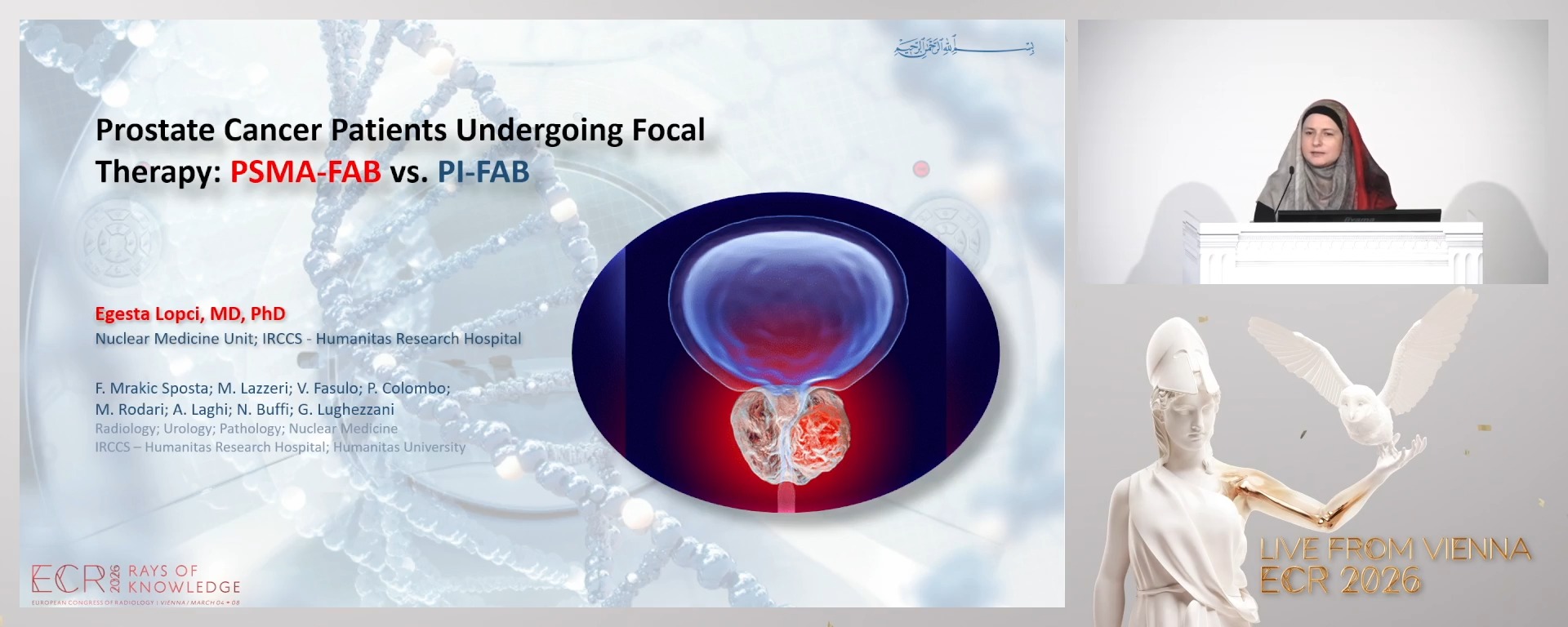
Prostate Cancer Patients Undergoing Focal Therapy: PSMA-FAB vs. PI-FAB
11:00Egesta Lopci, Rozzano / IT
3
Discussant
05:00Clemens C. Cyran, Munich / DE
4

Impact of dynamic contrast-enhanced MRI on treatment eligibility and planning in suspected prostate cancer: final analysis from the PRIME trial
11:00Aqua Asif, London / UK
5

Discussant
05:00Philippe Puech, Lille / FR
6
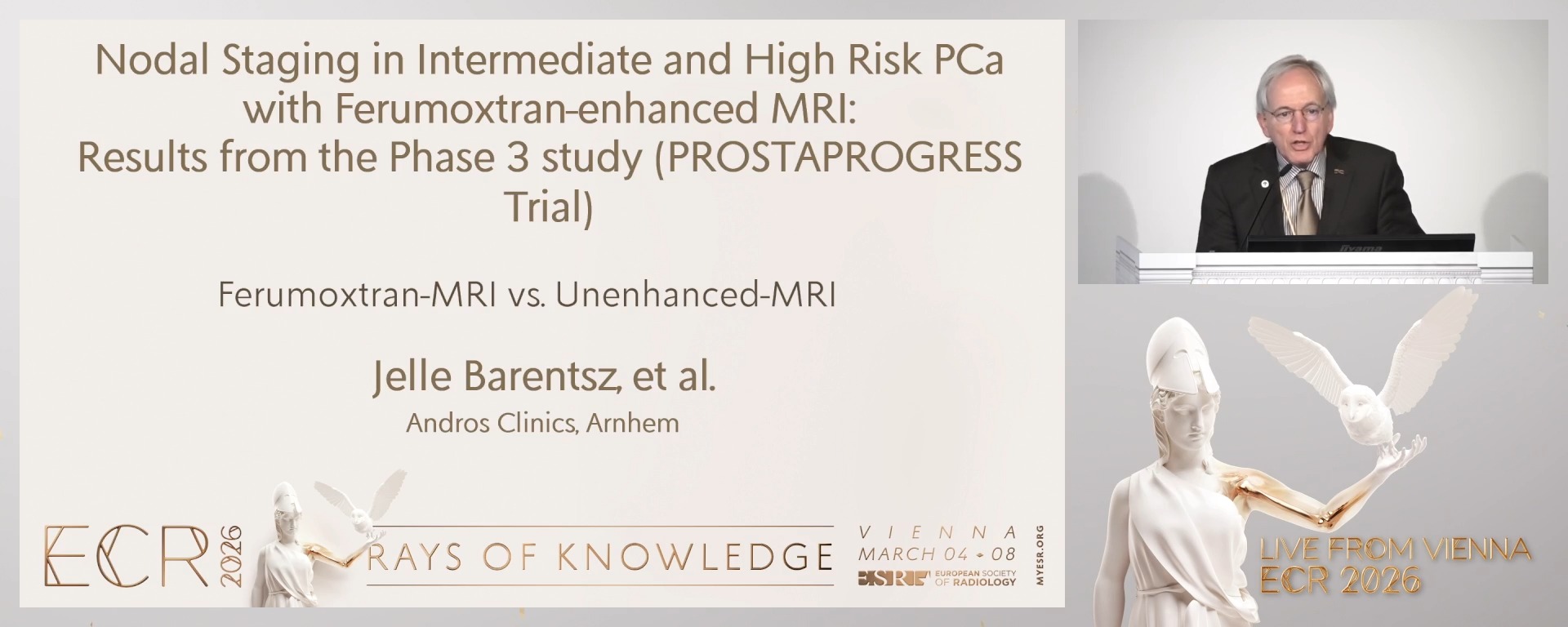
Nodal Staging in Intermediate- and High-Risk Prostate Cancer with Ferumoxtran-Enhanced MRI: Results from the Phase 3 PROSTAPROGRESS Trial
11:00Jelle O. Barentsz, Arnhem / NL
7
Discussant
05:00Geert M. Villeirs, Gent / BE
8

Diffusion-weighted magnetic resonance imaging versus surgical staging in patients with colorectal peritoneal metastases; the multicenter, international, randomized controlled DISCO trial
11:00Max Lahaye, Amsterdam / NL
9

Discussant
05:00Sofia Gourtsoyianni, Athens / GR
10

Intratumoral oncolytic virotherapy in pediatric diffuse midline gliomas: early MRI and clinical correlates from a phase I clinical trial
11:00Carmen Mbongo, Pamplona / ES
11

Discussant
05:00Antonella Castellano, Milan / IT
10 min
Chairpersons' introduction
Ferdia Aidan Gallagher, Cambridge / United Kingdom
Harriet Thoeny, Fribourg / Switzerland
Harriet Thoeny, Fribourg / Switzerland
11 min
Prostate Cancer Patients Undergoing Focal Therapy: PSMA-FAB vs. PI-FAB
Egesta Lopci, Rozzano / Italy
Author Block: E. Lopci1, F. Mrakic Sposta1, M. Lazzeri1, V. Fasulo1, P. Colombo2, M. Rodari1, A. Laghi2, N. Buffi2, G. Lughezzani2; 1Rozzano/IT, 2Pieve Emanuele/IT
Purpose: The aim of the present study is to compare in parallel mpMRI and PSMA PET/CT for the assessment of prostate cancer (PCa) patients candidate to high-intensity focused ultrasound (HIFU) ablative therapy.
Methods or Background: For this prospective study, we enrolled 55 PCa patients included in our dedicated trial (ICH-018: Focal Therapy for organ-confined prostate cancer) and assessed before and after focal therapy with HIFU. The patients were investigated at staging and 12 months after HIFU with mpMRI and PSMA PET/CT, along with biochemical assessment performed at 3, 6, and 12 months. One year after ablative therapy, patients underwent reclassification biopsy. For imaging parameters we considered PI-RADS, PRECISE, and PI-FAB for mpMRI, whereas Primary score, SUVmax, SUVratio, their variations and PSMA-FAB were analyzed for PET/CT. All clinical laboratory and imaging parameters have been analyzed with regards re-biopsy results post-HIFU.
Results or Findings: Median age of our cohort was 67 years (range 53-79), median PSA 6.7 ng/ml (range 2.1-16.4), median volume 44 cc (range 20-118), and median PSA density 0.13 (range 0.04-0.82). There was a 54.5% concordance rate between PSMA-FAB and PI-FAB scores. PSMA-FAB classification showed a sensitivity, specificity and accuracy for PCa detection at re-biopsy of 74.4%, 62.5%, and 70.9%, respectively, significantly correlating with re-biopsy results (P=0.014). On univariate analyses, also SUVmax, SUVratio and Primary score post-HIFU resulted significantly correlated to re-biopsy results, with PI-FAB resulting as independent predictive factor (P=0.0048).
Conclusion: To the best of our knowledge, this is the first study of its kind comparing PI-FAB and newly proposed PSMA-FAB in the same cohort of PCa patients. PSMA-FAB demostrated a significant correlation with re-biopsy results, although in the present cohort, PI-FAB proved an independent role in predicting biopsy results 12 months post-HIFU.
Limitations: Limited patients cohort.
Funding for this study: None.
Has your study been approved by an ethics committee? Yes
Ethics committee - additional information: Humanitas Ethics Committee
Purpose: The aim of the present study is to compare in parallel mpMRI and PSMA PET/CT for the assessment of prostate cancer (PCa) patients candidate to high-intensity focused ultrasound (HIFU) ablative therapy.
Methods or Background: For this prospective study, we enrolled 55 PCa patients included in our dedicated trial (ICH-018: Focal Therapy for organ-confined prostate cancer) and assessed before and after focal therapy with HIFU. The patients were investigated at staging and 12 months after HIFU with mpMRI and PSMA PET/CT, along with biochemical assessment performed at 3, 6, and 12 months. One year after ablative therapy, patients underwent reclassification biopsy. For imaging parameters we considered PI-RADS, PRECISE, and PI-FAB for mpMRI, whereas Primary score, SUVmax, SUVratio, their variations and PSMA-FAB were analyzed for PET/CT. All clinical laboratory and imaging parameters have been analyzed with regards re-biopsy results post-HIFU.
Results or Findings: Median age of our cohort was 67 years (range 53-79), median PSA 6.7 ng/ml (range 2.1-16.4), median volume 44 cc (range 20-118), and median PSA density 0.13 (range 0.04-0.82). There was a 54.5% concordance rate between PSMA-FAB and PI-FAB scores. PSMA-FAB classification showed a sensitivity, specificity and accuracy for PCa detection at re-biopsy of 74.4%, 62.5%, and 70.9%, respectively, significantly correlating with re-biopsy results (P=0.014). On univariate analyses, also SUVmax, SUVratio and Primary score post-HIFU resulted significantly correlated to re-biopsy results, with PI-FAB resulting as independent predictive factor (P=0.0048).
Conclusion: To the best of our knowledge, this is the first study of its kind comparing PI-FAB and newly proposed PSMA-FAB in the same cohort of PCa patients. PSMA-FAB demostrated a significant correlation with re-biopsy results, although in the present cohort, PI-FAB proved an independent role in predicting biopsy results 12 months post-HIFU.
Limitations: Limited patients cohort.
Funding for this study: None.
Has your study been approved by an ethics committee? Yes
Ethics committee - additional information: Humanitas Ethics Committee
5 min
Discussant
Clemens C. Cyran, Munich / Germany
11 min
Impact of dynamic contrast-enhanced MRI on treatment eligibility and planning in suspected prostate cancer: final analysis from the PRIME trial
Aqua Asif, London / United Kingdom
Author Block: A. Asif, P. S. G. C. .; London/UK
Purpose: Multiparametric MRI (mpMRI) with dynamic contrast-enhanced (DCE) sequences represents the international standard for prostate cancer diagnosis. DCE may influence treatment eligibility and planning decisions, from surgical approach to radiotherapy targeting. We evaluated this in PRIME, a prospective international trial. This is the first study examining contrast sequences' impact specifically on treatment planning, made possible through within-patient design.
Methods or Background: PRIME (NCT04571840) enrolled men with suspected prostate cancer (PSA ≤20 ng/mL, no prior biopsy) across 22 centres in 12 countries (April 2022–September 2023). In this pre-specified secondary analysis, virtual multidisciplinary teams (MDTs) comprising radiologists, urologists, and oncologists reviewed 488 patients. Clinicians were initially blinded to DCE, making treatment decisions using only biparametric MRI (bpMRI: T2-weighted and diffusion-weighted imaging) with bpMRI-specific biopsy results. After unblinding to DCE (and DCE-specific biopsy if performed), treatment decisions were re-evaluated. MDTs assessed eligibility and planning for radical prostatectomy (nerve-sparing, bladder neck sparing, Retzius sparing), focal therapy (extent and energy source), and radiotherapy/brachytherapy (target volume delineation and rectal spacer use).
Results or Findings: DCE influenced treatment decisions in 31/488 patients (6.4%; 95% CI 4.4–9.0): 21 (4.3%; 95% CI 2.7–6.5) had eligibility changes, 15 (3.1%; 95% CI 1.7–5.0) had planning changes, and 5 (1.0%) had both. Among 119 radical prostatectomy candidates, nerve-sparing recommendations changed in 6 (5.0%). Of 41 focal therapy candidates, energy source changed in 1 (2.4%). Among 145 radiotherapy/brachytherapy candidates, 6 (4.1%) had target volume changes and 3 (2.1%) had rectal spacer modifications. Active surveillance eligibility changed in 7 (1.4%).
Conclusion: Overall, DCE did not substantially influence treatment eligibility or planning. However, for patients selected for specific treatment modalities, contrast affected decisions in a small subset.
Limitations: This exploratory secondary analysis was not statistically powered for treatment planning subgroup comparisons.
Funding for this study: Funded by the John Black Charitable Foundation, Prostate Cancer UK, the European Association of Urology Research Foundation, and the Wolfgang.Dieckmann Foundation. This study was sponsored by University College London. Primary funding was provided by Prostate Cancer UK (grant TLD-PF19-004) and the John Black Charitable Trust Travelling Prize Grant. Additional support for international sites was supplied by the European Association of Urology Research Foundation and the Wolfgang.Dieckmann Foundation.
Has your study been approved by an ethics committee? Yes
Ethics committee - additional information: Ethical approval was obtained from the National Research Ethics Committee West Midlands, Nottingham (21/WM/0091). The trial was approved by the ethical review board at each participating institution.
Purpose: Multiparametric MRI (mpMRI) with dynamic contrast-enhanced (DCE) sequences represents the international standard for prostate cancer diagnosis. DCE may influence treatment eligibility and planning decisions, from surgical approach to radiotherapy targeting. We evaluated this in PRIME, a prospective international trial. This is the first study examining contrast sequences' impact specifically on treatment planning, made possible through within-patient design.
Methods or Background: PRIME (NCT04571840) enrolled men with suspected prostate cancer (PSA ≤20 ng/mL, no prior biopsy) across 22 centres in 12 countries (April 2022–September 2023). In this pre-specified secondary analysis, virtual multidisciplinary teams (MDTs) comprising radiologists, urologists, and oncologists reviewed 488 patients. Clinicians were initially blinded to DCE, making treatment decisions using only biparametric MRI (bpMRI: T2-weighted and diffusion-weighted imaging) with bpMRI-specific biopsy results. After unblinding to DCE (and DCE-specific biopsy if performed), treatment decisions were re-evaluated. MDTs assessed eligibility and planning for radical prostatectomy (nerve-sparing, bladder neck sparing, Retzius sparing), focal therapy (extent and energy source), and radiotherapy/brachytherapy (target volume delineation and rectal spacer use).
Results or Findings: DCE influenced treatment decisions in 31/488 patients (6.4%; 95% CI 4.4–9.0): 21 (4.3%; 95% CI 2.7–6.5) had eligibility changes, 15 (3.1%; 95% CI 1.7–5.0) had planning changes, and 5 (1.0%) had both. Among 119 radical prostatectomy candidates, nerve-sparing recommendations changed in 6 (5.0%). Of 41 focal therapy candidates, energy source changed in 1 (2.4%). Among 145 radiotherapy/brachytherapy candidates, 6 (4.1%) had target volume changes and 3 (2.1%) had rectal spacer modifications. Active surveillance eligibility changed in 7 (1.4%).
Conclusion: Overall, DCE did not substantially influence treatment eligibility or planning. However, for patients selected for specific treatment modalities, contrast affected decisions in a small subset.
Limitations: This exploratory secondary analysis was not statistically powered for treatment planning subgroup comparisons.
Funding for this study: Funded by the John Black Charitable Foundation, Prostate Cancer UK, the European Association of Urology Research Foundation, and the Wolfgang.Dieckmann Foundation. This study was sponsored by University College London. Primary funding was provided by Prostate Cancer UK (grant TLD-PF19-004) and the John Black Charitable Trust Travelling Prize Grant. Additional support for international sites was supplied by the European Association of Urology Research Foundation and the Wolfgang.Dieckmann Foundation.
Has your study been approved by an ethics committee? Yes
Ethics committee - additional information: Ethical approval was obtained from the National Research Ethics Committee West Midlands, Nottingham (21/WM/0091). The trial was approved by the ethical review board at each participating institution.
5 min
Discussant
Philippe Puech, Lille / France
11 min
Nodal Staging in Intermediate- and High-Risk Prostate Cancer with Ferumoxtran-Enhanced MRI: Results from the Phase 3 PROSTAPROGRESS Trial
Jelle O. Barentsz, Arnhem / Netherlands
Author Block: P. Zamecnik1, T. Hambrock2, F. Raat3, D. Maintz4, I. G. Schoots5, R-T. Hoffmann6, J. W. Feuerstein7, B. Hamm8, J. O. Barentsz1; 1Arnhem/NL, 2Offenbach am Main/DE, 3Roermond/NL, 4Münster/DE, 5Rotterdam/NL, 6Dresden/DE, 7Nijmegen/NL, 8Berlin/DE
Purpose: Previous clinical studies have shown that ferumoxtran-enhanced macrophage-MRI (m-MRI) has the potential to detect lymph node metastases (LNM) in patients with prostate cancer (PCa). This phase 3 study should confirm diagnostic performance using a confirmatory, prospective design.
To definitively assess the diagnostic accuracy of m-MRI compared with unenhanced MRI for detecting LNM in patients with newly diagnosed, intermediate- to high-risk PCa, using histopathology from extended pelvic lymph node dissection (ePLND) as the reference standard.
Methods or Background: This prospective, open-label, single-arm Phase 3 study (PROSTAPROGRESS) enrolled 160 men with newly diagnosed intermediate- or high-risk PCa at 15 European centres, all scheduled for radical prostatectomy and ePLND.
Results or Findings: Primary endpoints were met, demonstrating superior per-patient sensitivity (19,2% vs. 0,0%; p < 0.025) and non-inferior specificity (94.5% vs 97.6%; p < 0,001). The mMRI sensitivity for LNs ≥ 2 mm was 35.3%. A high non-retrieval rate was also observed: 73% of m-MRI-suspicious LNs, particularly in the internal and common iliac regions, were not resected, which appears to be the most important limitation.
Conclusion: All primary endpoints were met. M-MRI has higher sensitivity than unenhanced-MRI for detecting normal-sized metastatic LNs, while maintaining high specificity. Its implementation can enhance non-invasive N-staging and improve patient management in intermediate- and high-risk PCa.
Limitations: m-MRI reading has a learning curve; moderate reader variability was observed, underscoring the importance of appropriate training to ensure reading consistency. The ‘non-retrieval’ of 73% of suspicious nodes introduces verification bias, likely underestimating the modality's true sensitivity.
Funding for this study: SPL Medical
Has your study been approved by an ethics committee? Yes
Ethics committee - additional information: PROSTAPROGRESS; EudraCT 2018-004310-18
Purpose: Previous clinical studies have shown that ferumoxtran-enhanced macrophage-MRI (m-MRI) has the potential to detect lymph node metastases (LNM) in patients with prostate cancer (PCa). This phase 3 study should confirm diagnostic performance using a confirmatory, prospective design.
To definitively assess the diagnostic accuracy of m-MRI compared with unenhanced MRI for detecting LNM in patients with newly diagnosed, intermediate- to high-risk PCa, using histopathology from extended pelvic lymph node dissection (ePLND) as the reference standard.
Methods or Background: This prospective, open-label, single-arm Phase 3 study (PROSTAPROGRESS) enrolled 160 men with newly diagnosed intermediate- or high-risk PCa at 15 European centres, all scheduled for radical prostatectomy and ePLND.
Results or Findings: Primary endpoints were met, demonstrating superior per-patient sensitivity (19,2% vs. 0,0%; p < 0.025) and non-inferior specificity (94.5% vs 97.6%; p < 0,001). The mMRI sensitivity for LNs ≥ 2 mm was 35.3%. A high non-retrieval rate was also observed: 73% of m-MRI-suspicious LNs, particularly in the internal and common iliac regions, were not resected, which appears to be the most important limitation.
Conclusion: All primary endpoints were met. M-MRI has higher sensitivity than unenhanced-MRI for detecting normal-sized metastatic LNs, while maintaining high specificity. Its implementation can enhance non-invasive N-staging and improve patient management in intermediate- and high-risk PCa.
Limitations: m-MRI reading has a learning curve; moderate reader variability was observed, underscoring the importance of appropriate training to ensure reading consistency. The ‘non-retrieval’ of 73% of suspicious nodes introduces verification bias, likely underestimating the modality's true sensitivity.
Funding for this study: SPL Medical
Has your study been approved by an ethics committee? Yes
Ethics committee - additional information: PROSTAPROGRESS; EudraCT 2018-004310-18
5 min
Discussant
Geert M. Villeirs, Gent / Belgium
11 min
Diffusion-weighted magnetic resonance imaging versus surgical staging in patients with colorectal peritoneal metastases; the multicenter, international, randomized controlled DISCO trial
Max Lahaye, Amsterdam / Netherlands
5 min
Discussant
Sofia Gourtsoyianni, Athens / Greece
11 min
Intratumoral oncolytic virotherapy in pediatric diffuse midline gliomas: early MRI and clinical correlates from a phase I clinical trial
Carmen Mbongo, Pamplona / Spain

Author Block: C. Mbongo, M. Calvo Imirizaldu, R. Garcia de Eulate, P. Dominguez Echavarri; Pamplona/ES
Purpose: To describe imaging and clinical outcomes following intratumoral administration of DNX-2401, a conditionally replicative oncolytic adenovirus, in children with newly diagnosed diffuse intrinsic pontine glioma (DIPG).
Methods or Background: This single-arm phase I study evaluated the safety and preliminary efficacy of DNX-2401 administered via stereotactic injection into the tumor, followed by conventional radiotherapy 2–6 weeks later. Eligible patients had radiologically confirmed DIPG. MRI follow-up included volumetric assessment and response evaluation according to RAPNO criteria. Tumor molecular profiling and immune analyses were performed.
Results or Findings: Twelve patients were enrolled. H3K27M mutations were detected in 83% and TP53 mutations in 42%. Treatment was well tolerated, with no dose-limiting or treatment related grade ≥3 toxicities. Transient perilesional edema was common on early post-injection MRI, consistent with localized inflammatory response. Reductions in enhancing tumor area were observed in 9/12 patients (75%), including three confirmed radiological responses per RAPNO criteria. Median overall survival reached 17.8 months, with three patients alive beyond 24 months.
Conclusion: Intratumoral infusion of DNX-2401 followed by radiotherapy is feasible and safe in pediatric DIPG. MRI demonstrates characteristic inflammatory changes and delayed volumetric reductions consistent with viral oncolysis and immune activation. These encouraging early imaging–clinical correlations warrant further evaluation in larger prospective studies.
Limitations: Small sample size and single-arm design, inherent to early-phase pediatric neuro-oncology trials, limit the generalizability of results.
Absence of a control group precludes definitive conclusions regarding survival benefit.
Short- and medium-term follow-up, with ongoing survivors, prevents full assessment of long-term efficacy and potential delayed toxicities.
Imaging interpretation challenges: early post-injection MRI changes (edema, enhancement) may overlap with treatment-related inflammation, complicating objective response assessment under RAPNO criteria.
Molecular heterogeneity and variable viral distribution may influence response patterns and should be explored in larger cohorts.
Funding for this study: The study took place in the setting of a clinical trial
Has your study been approved by an ethics committee? Yes
Ethics committee - additional information: N/A
Purpose: To describe imaging and clinical outcomes following intratumoral administration of DNX-2401, a conditionally replicative oncolytic adenovirus, in children with newly diagnosed diffuse intrinsic pontine glioma (DIPG).
Methods or Background: This single-arm phase I study evaluated the safety and preliminary efficacy of DNX-2401 administered via stereotactic injection into the tumor, followed by conventional radiotherapy 2–6 weeks later. Eligible patients had radiologically confirmed DIPG. MRI follow-up included volumetric assessment and response evaluation according to RAPNO criteria. Tumor molecular profiling and immune analyses were performed.
Results or Findings: Twelve patients were enrolled. H3K27M mutations were detected in 83% and TP53 mutations in 42%. Treatment was well tolerated, with no dose-limiting or treatment related grade ≥3 toxicities. Transient perilesional edema was common on early post-injection MRI, consistent with localized inflammatory response. Reductions in enhancing tumor area were observed in 9/12 patients (75%), including three confirmed radiological responses per RAPNO criteria. Median overall survival reached 17.8 months, with three patients alive beyond 24 months.
Conclusion: Intratumoral infusion of DNX-2401 followed by radiotherapy is feasible and safe in pediatric DIPG. MRI demonstrates characteristic inflammatory changes and delayed volumetric reductions consistent with viral oncolysis and immune activation. These encouraging early imaging–clinical correlations warrant further evaluation in larger prospective studies.
Limitations: Small sample size and single-arm design, inherent to early-phase pediatric neuro-oncology trials, limit the generalizability of results.
Absence of a control group precludes definitive conclusions regarding survival benefit.
Short- and medium-term follow-up, with ongoing survivors, prevents full assessment of long-term efficacy and potential delayed toxicities.
Imaging interpretation challenges: early post-injection MRI changes (edema, enhancement) may overlap with treatment-related inflammation, complicating objective response assessment under RAPNO criteria.
Molecular heterogeneity and variable viral distribution may influence response patterns and should be explored in larger cohorts.
Funding for this study: The study took place in the setting of a clinical trial
Has your study been approved by an ethics committee? Yes
Ethics committee - additional information: N/A
5 min
Discussant
Antonella Castellano, Milan / Italy