Industry Symposium by United Imaging Healthcare
IND 20 - When Motion Becomes Information: Dynamic Imaging with Next-Gen CT & MR
Lectures
1
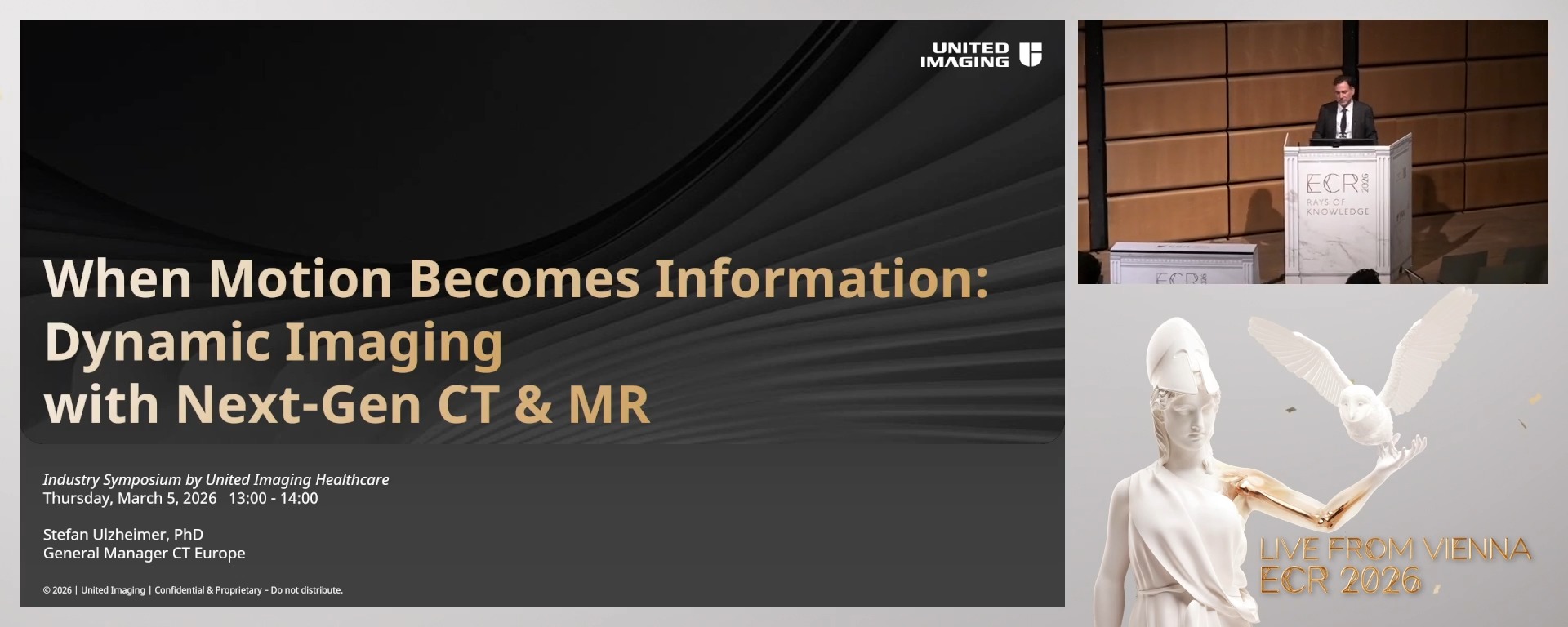
When Motion Becomes Information: Dynamic Imaging with Next-Gen CT & MR
05:00Stefan Ulzheimer, Nürnberg / DE
2
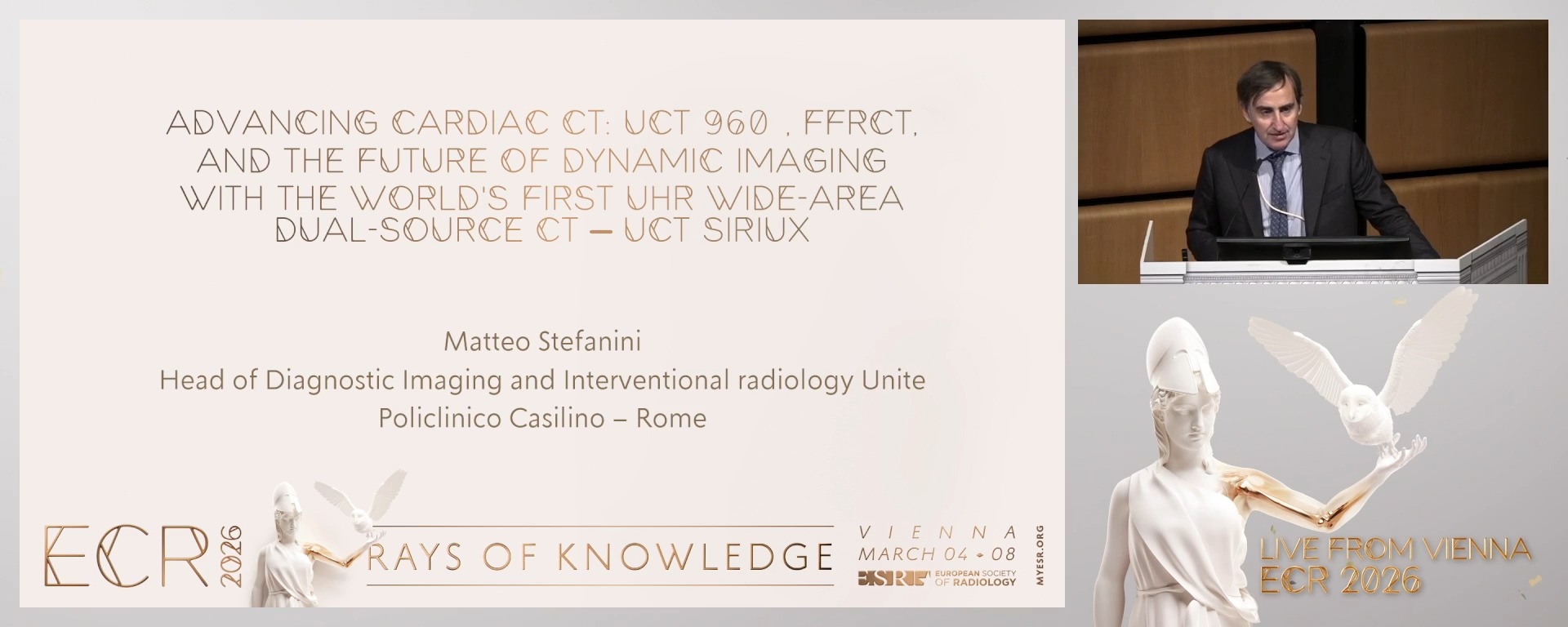
Advancing Cardiac CT: uCT 960+, FFRct, and the Future of Dynamic Imaging with the World’s First UHR Wide-Area Dual-Source CT — uCT SiriuX
20:00Matteo Stefanini, Rome / IT
3
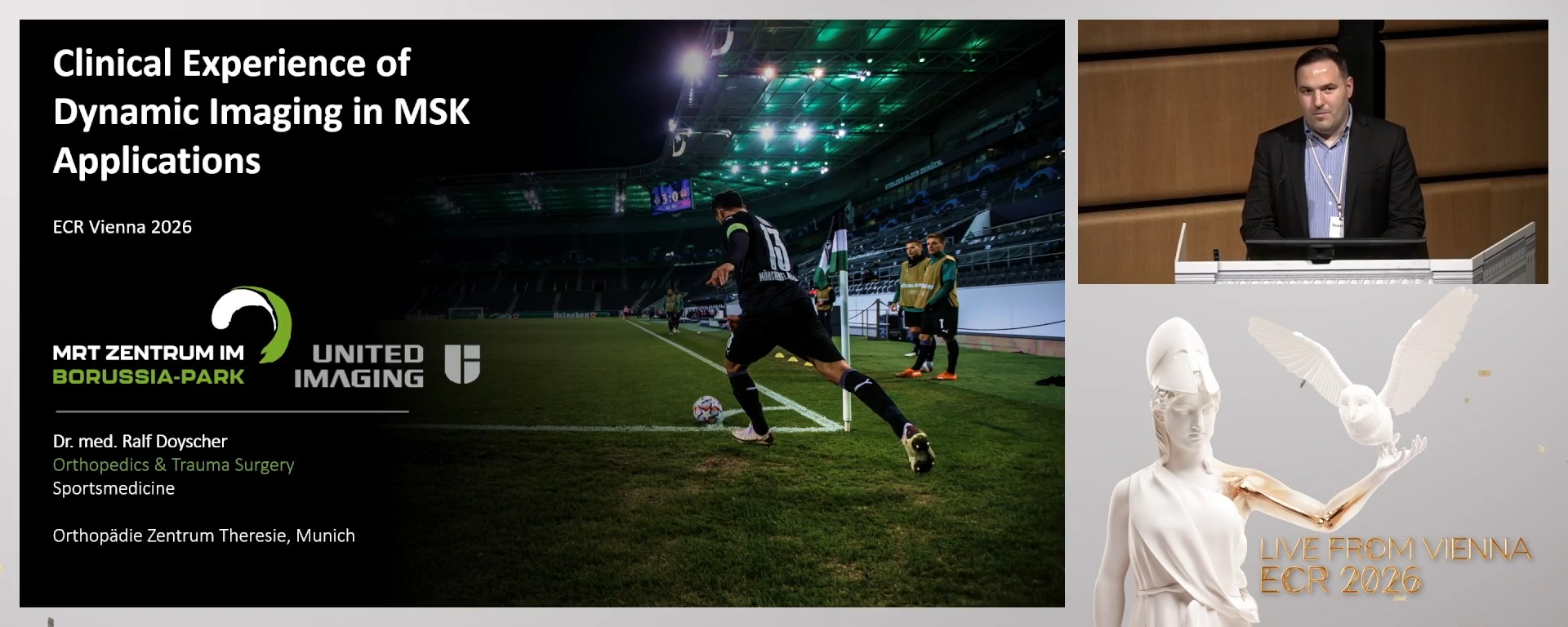
Clinical Experience of Dynamic Imaging in MSK Applications & More with uMR Ultra
20:00Ralf Doyscher, München / DE
4
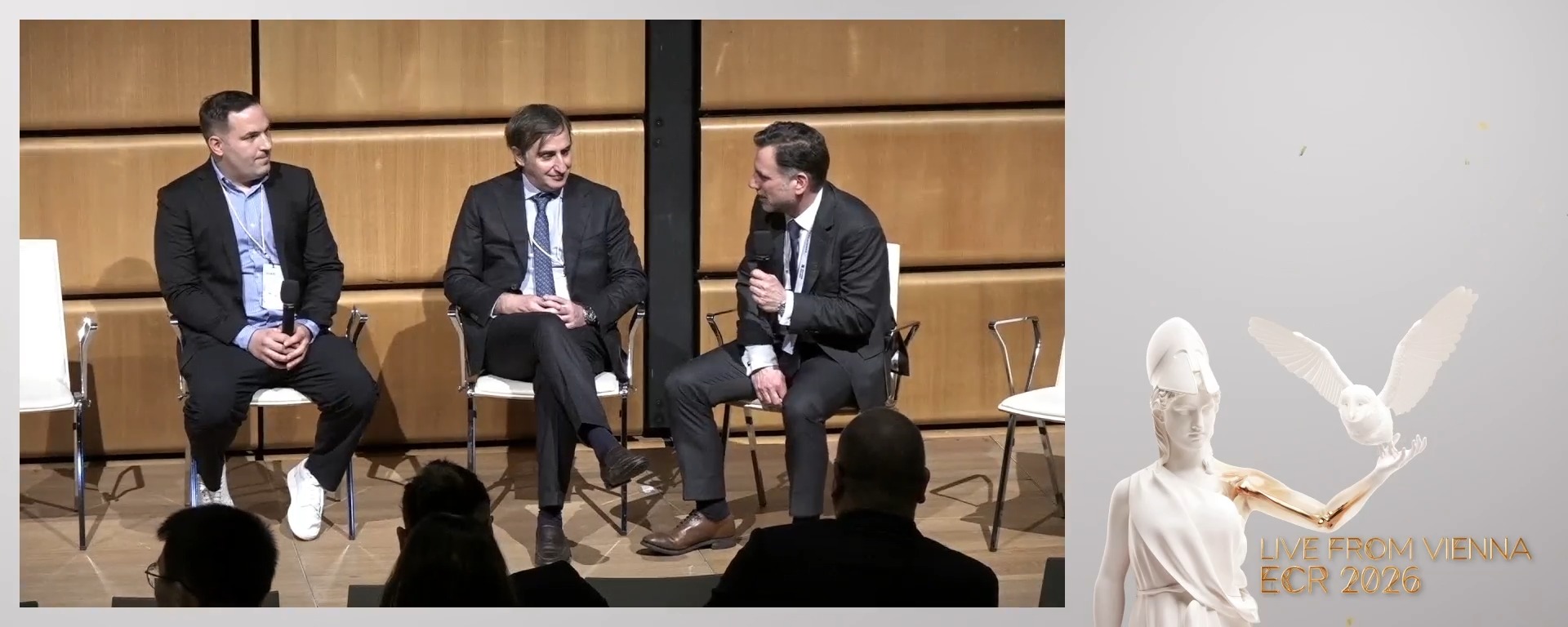
Panel discussion: Beyond Motion Artifacts: How Dynamic Imaging Will Transform CT & MR Practice
15:00Stefan Ulzheimer, Nürnberg / DE, Matteo Stefanini, Rome / IT
For decades, diagnostic imaging has focused on freezing the motion of organs to improve clarity and accuracy. Today, we stand on the verge of a paradigm shift: not only can we suppress motion, we can now visualize it in unprecedented detail—both in CT and MRI.
This session explores the most recent technological breakthroughs that make this new era of motion imaging possible.
This session explores the most recent technological breakthroughs that make this new era of motion imaging possible.
5 min
When Motion Becomes Information: Dynamic Imaging with Next-Gen CT & MR
Stefan Ulzheimer, Nürnberg / Germany
20 min
Advancing Cardiac CT: uCT 960+, FFRct, and the Future of Dynamic Imaging with the World’s First UHR Wide-Area Dual-Source CT — uCT SiriuX
Matteo Stefanini, Roma / Italy
20 min
Clinical Experience of Dynamic Imaging in MSK Applications & More with uMR Ultra
Ralf Doyscher, München / Germany
15 min
Panel discussion: Beyond Motion Artifacts: How Dynamic Imaging Will Transform CT & MR Practice
Stefan Ulzheimer, Nürnberg / Germany
Matteo Stefanini, Roma / Italy
Matteo Stefanini, Roma / Italy
After this session, participants will be able to:
- Describe the limitations of conventional motion-management strategies in CT and MR and the diagnostic consequences of residual motion artifacts.
- Explain how recent hardware and software innovations — including wide-area detector CT, dual-source architectures, and dynamic MR sequences — enable imaging of moving organs with unprecedented fidelity.
- Evaluate the role of AI across modalities, from reconstruction and noise suppression to quantitative post-processing tools such as FFRct.
- Compare emerging dynamic acquisition approaches that capture, characterize, and interpret motion versus traditional motion-suppression methods.
- Discuss early clinical evidence demonstrating improvements in image quality, diagnostic confidence, and patient experience with next-generation CT and MR systems.
- Identify future opportunities for dynamic imaging in both cardiac and whole-body applications, and outline practical steps for integrating these technologies into clinical workflows.
- Describe the limitations of conventional motion-management strategies in CT and MR and the diagnostic consequences of residual motion artifacts.
- Explain how recent hardware and software innovations — including wide-area detector CT, dual-source architectures, and dynamic MR sequences — enable imaging of moving organs with unprecedented fidelity.
- Evaluate the role of AI across modalities, from reconstruction and noise suppression to quantitative post-processing tools such as FFRct.
- Compare emerging dynamic acquisition approaches that capture, characterize, and interpret motion versus traditional motion-suppression methods.
- Discuss early clinical evidence demonstrating improvements in image quality, diagnostic confidence, and patient experience with next-generation CT and MR systems.
- Identify future opportunities for dynamic imaging in both cardiac and whole-body applications, and outline practical steps for integrating these technologies into clinical workflows.