Refresher Course: Neuro
RC 711 - Post-operative and post-treatment brain and spine: imaging essentials for the radiologist
Lectures
1
Chairperson's introduction
02:00Tilak Das, Cambridge / UK
2
Post-operative spine: what to report as normal and abnormal
12:00Iris Melanie Noebauer-Huhmann, Vienna / AT
3
Tips and tricks in the follow-up of post-operative brain tumours
12:00Carlos Majós, Barcelona / ES
4
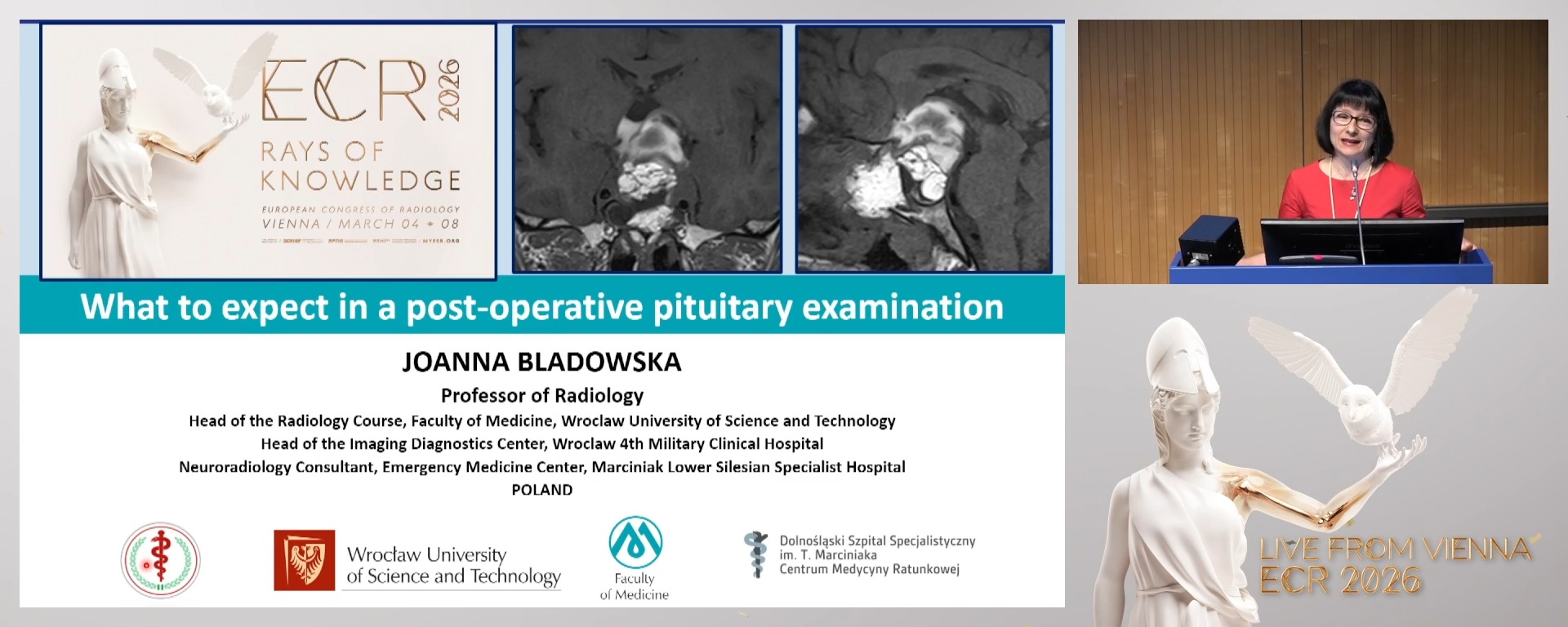
What to expect in a post-operative pituitary examination
12:00Joanna Bladowska, Wrocław / PL
5
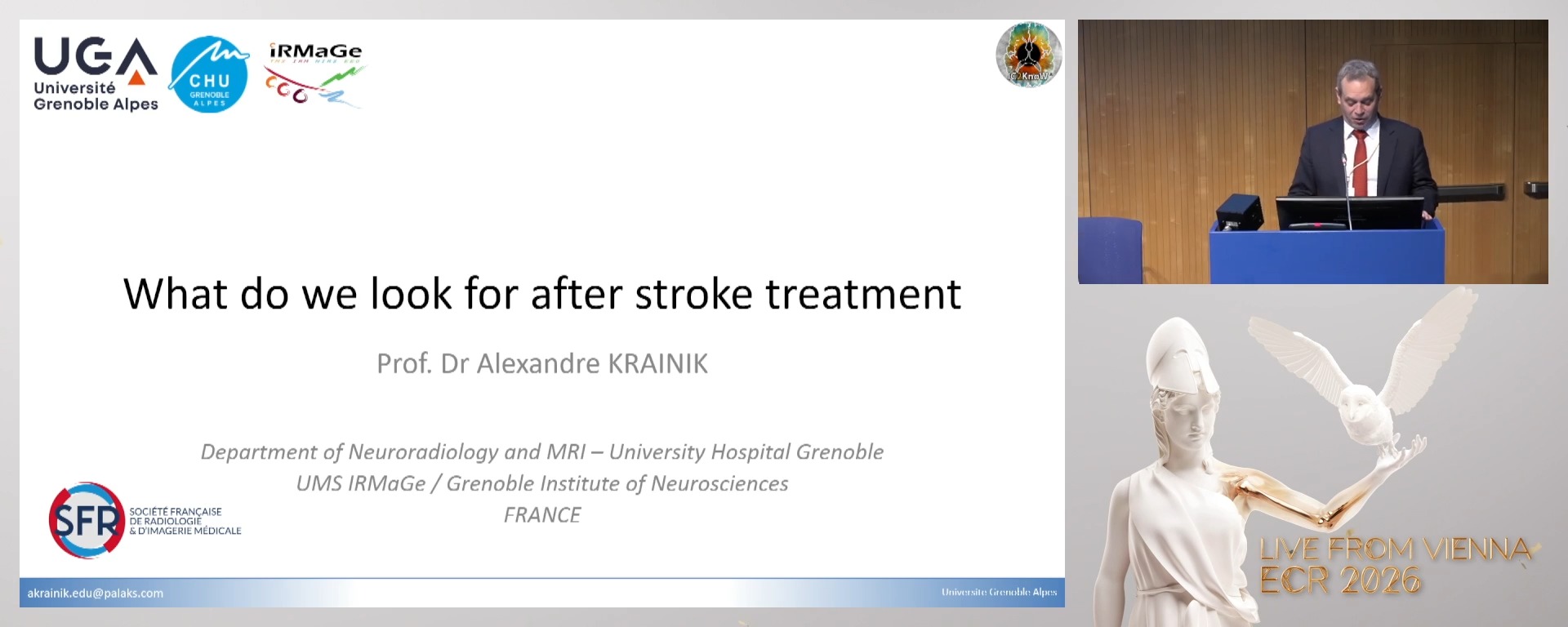
What do we look for after stroke treatment
12:00Alexandre Krainik, Grenoble / FR
6
Q&A
10:00Q&A
2 min
Chairperson's introduction
Tilak Das, Cambridge / United Kingdom
12 min
Post-operative spine: what to report as normal and abnormal
Iris Melanie Noebauer-Huhmann, Vienna / Austria
- To learn to distinguish expected postoperative spine changes from findings that require further evaluation.
- To understand the indications for different imaging modalities and how to choose the most appropriate protocol for each postoperative scenario.
- To understand how to tailor your report to provide clear, clinically relevant information for the treating team.
12 min
Tips and tricks in the follow-up of post-operative brain tumours
Carlos Majós, Barcelona / Spain
- To understand which imaging modalities and protocols are most useful at different stages of postoperative follow-up.
- To develop a structured approach for evaluating follow-up scans after brain tumour surgery.
- To learn to navigate the challenges of distinguishing true tumour progression from post-treatment imaging changes and their mimics.
12 min
What to expect in a post-operative pituitary examination
Joanna Bladowska, Wrocław / Poland
- To learn what to assess in postoperative pituitary imaging systematically, which findings must not be missed, and why.
- To understand how to distinguish expected changes from relevant abnormalities that may impact patient care.
- To develop a focused reporting approach highlighting what truly matters for endocrinological and surgical follow-up.
12 min
What do we look for after stroke treatment
Alexandre Krainik, Grenoble / France
- To become familiar with key imaging findings in the early phase after stroke treatment and understand which modality to use, when, and why.
- To learn to interpret post-treatment studies focusing on clinically relevant information that guides prognosis and therapeutic decisions.
- To identify subtle or urgent findings that require timely communication and may directly influence patient management.
10 min
Q&A