State of the Art Symposium
SA 16a - Rectal cancer: where do we stand and where do we go?
Lectures
1
Chairperson's introduction
03:00Sofia Gourtsoyianni, Athens / GR
2
Where do we stand? Primary rectal cancer staging
18:00Svetlana Balyasnikova, London / UK
3
Where do we stand? Restaging
18:00Inês Santiago, Cascais / PT
4
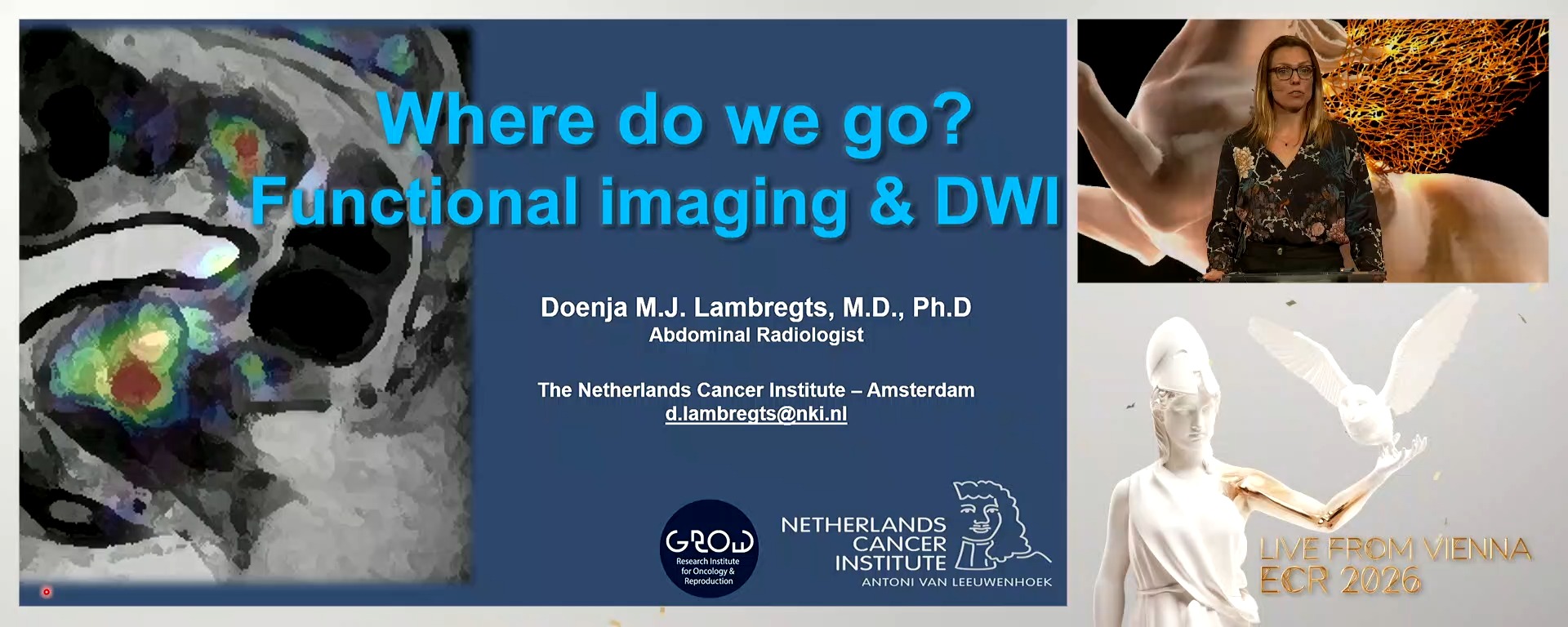
Where do we go? Functional imaging techniques and DWI
18:00Doenja Marina Johanna Lambregts, Amsterdam / NL
5
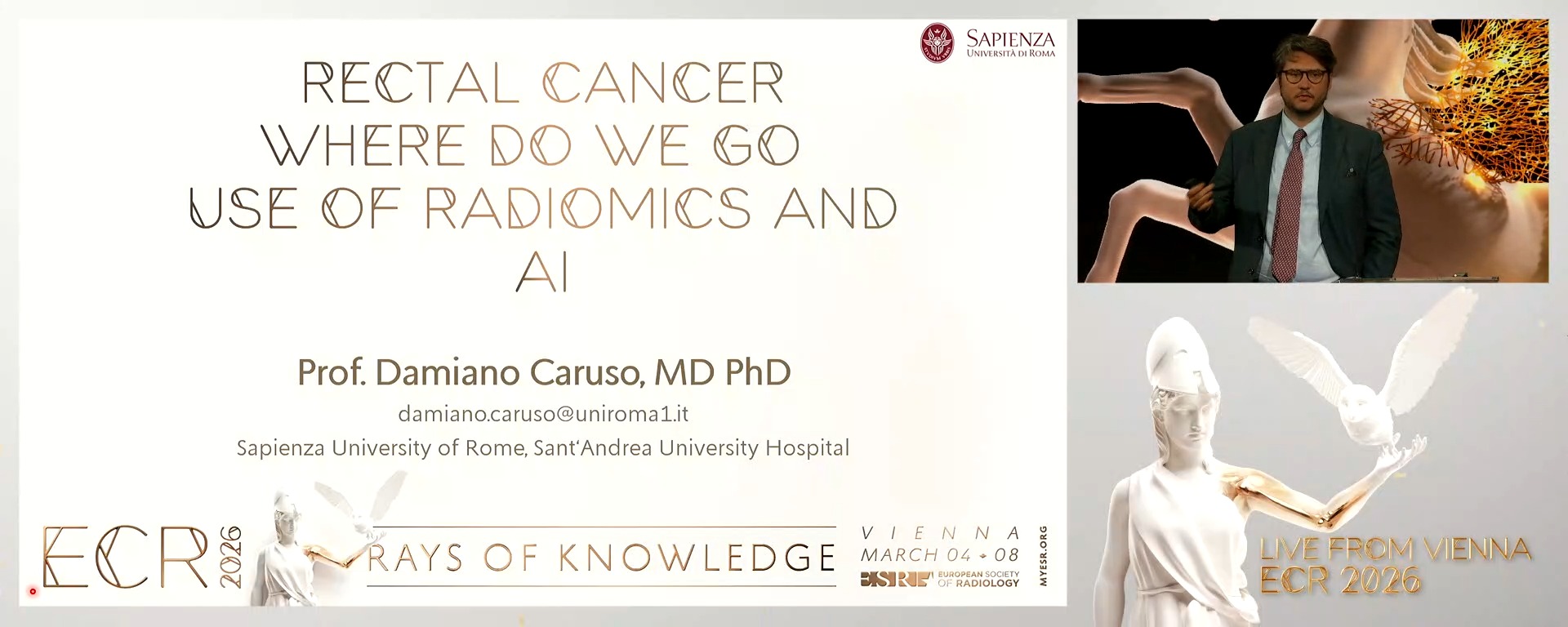
Where do we go? Use of radiomics and AI
18:00Damiano Caruso, Rome / IT
6
Panel discussion: Enhanced structured reporting or not?
15:00Panel discussion: Enhanced structured reporting or not?
3 min
Chairperson's introduction
Sofia Gourtsoyianni, Athens / Greece
18 min
Where do we stand? Primary rectal cancer staging
Svetlana Balyasnikova, London / United Kingdom
- To discuss the role of imaging in early rectal cancers.
- To learn about sphincter complex anatomy in relation to low rectal cancers.
- To become familiar with extra TNM prognostic imaging markers such as EMVI and mesorectal fascia involvement.
18 min
Where do we stand? Restaging
Inês Santiago, Parede / Portugal
- To outline the key criteria for high-quality MR imaging and recognise common pitfalls in image interpretation following neoadjuvant therapy.
- To explore the role of MRI in assessing rectal cancer response, focusing on its influence on curative surgical planning and patient selection for organ preservation strategies.
- To identify MR imaging features indicative of a clinical complete response.
18 min
Where do we go? Functional imaging techniques and DWI
Doenja Marina Johanna Lambregts, Amsterdam / Netherlands
- To understand how DWI and other functional imaging may guide decision-making in the clinical management of rectal cancer.
- To know emerging trends and future developments in functional imaging, including MRI and DWI technology advances.
- To be familiar with the key limitations and challenges of these techniques.
18 min
Where do we go? Use of radiomics and AI
Damiano Caruso, Rome / Italy
- To understand the principles of radiomics and artificial intelligence (AI) in the context of rectal cancer imaging, including the workflow from image acquisition to data extraction and model development.
- To evaluate the current and emerging applications of radiomics and AI in rectal cancer for diagnosis, staging, treatment response assessment, and outcome prediction.
- To identify the main challenges and future directions for the clinical integration of radiomics and AI, including validation strategies, regulatory considerations, and multidisciplinary collaboration.
15 min
Panel discussion: Enhanced structured reporting or not?