International Atomic Energy Agency Session
IAEA - Enhancing quality and safety in medical imaging: an IAEA global perspective
Lectures
1
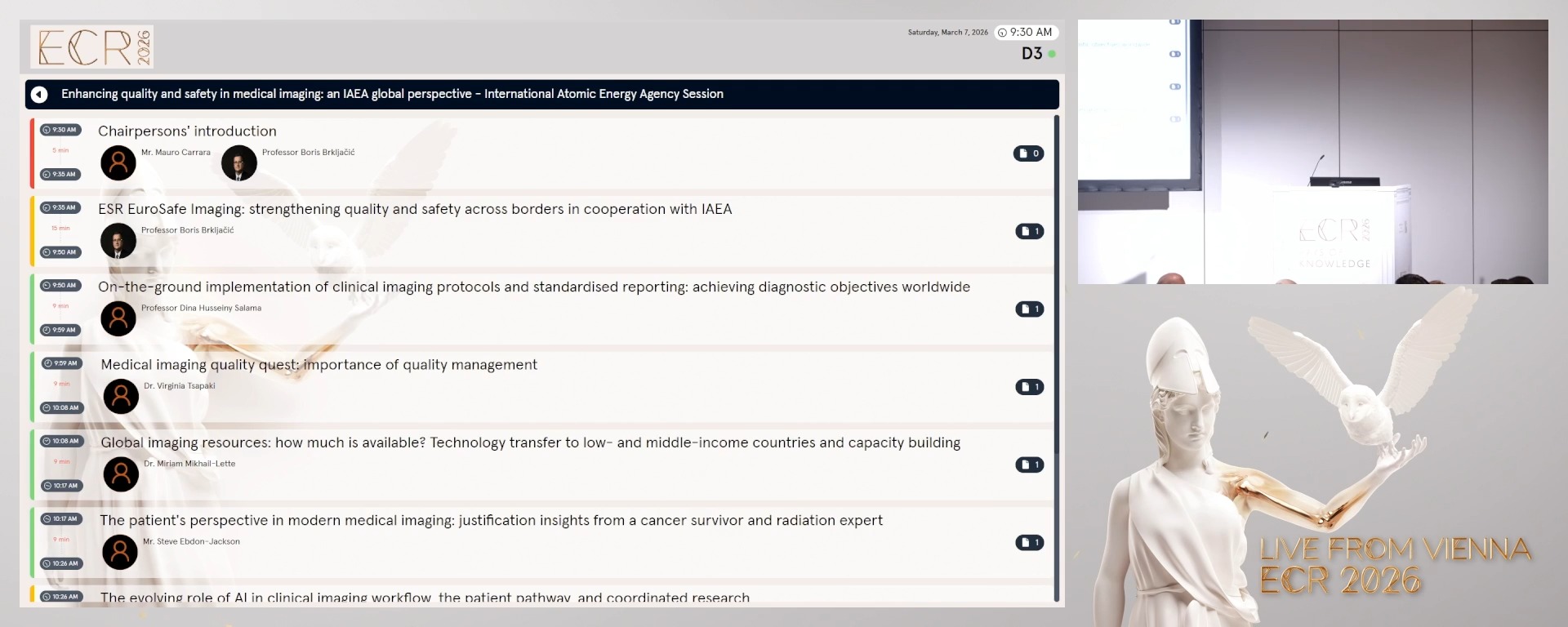
Chairpersons' introduction
05:00Boris Brkljačić, Zagreb / HR, Mauro Carrara, Vienna / AT
2
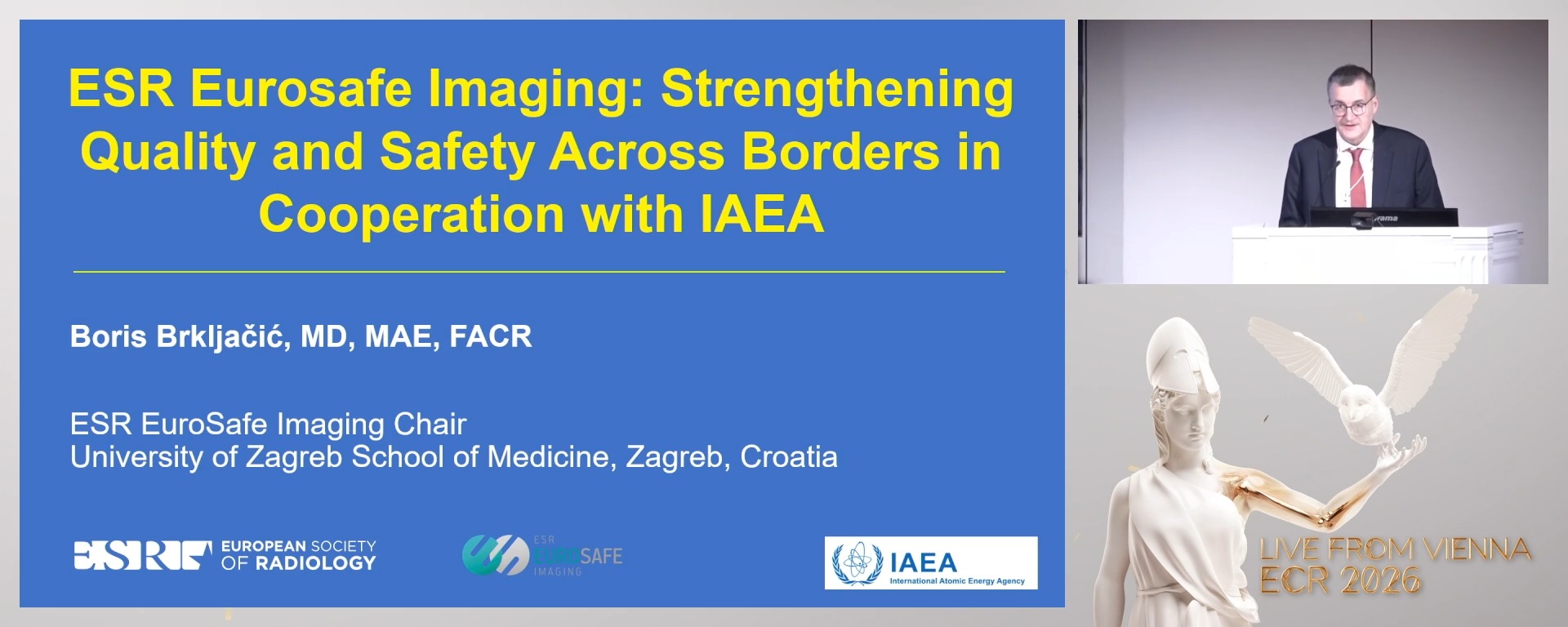
ESR EuroSafe Imaging: strengthening quality and safety across borders in cooperation with IAEA
15:00Boris Brkljačić, Zagreb / HR
3
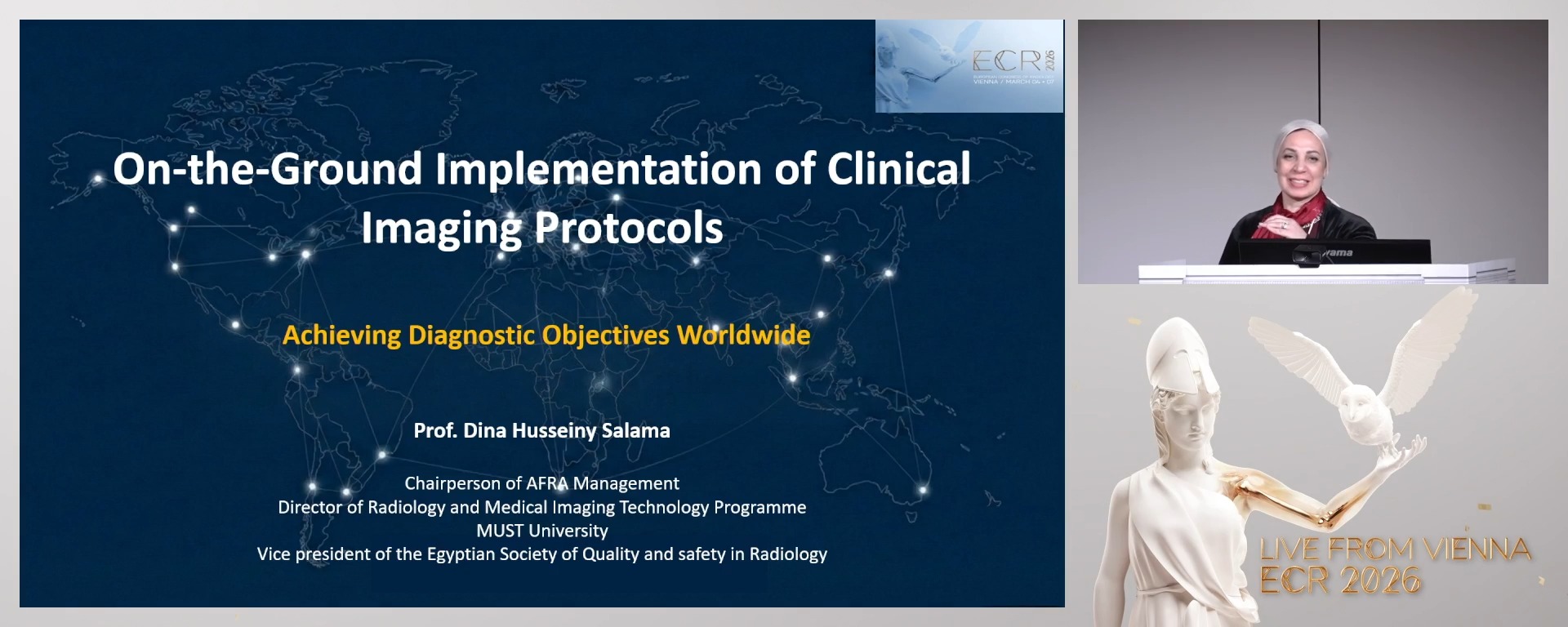
On-the-ground implementation of clinical imaging protocols and standardised reporting: achieving diagnostic objectives worldwide
09:00Dina Husseiny Salama, Cairo / EG
4
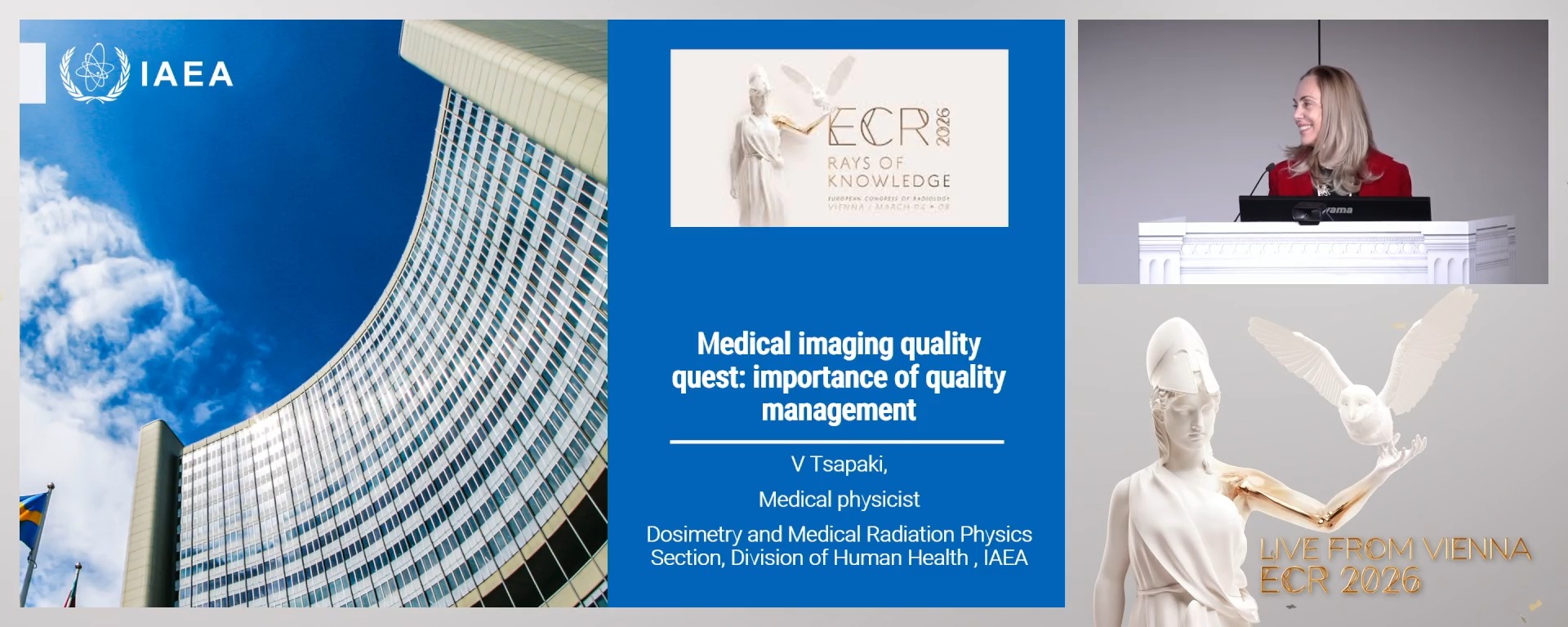
Medical imaging quality quest: importance of quality management
09:00Virginia Tsapaki, Vienna / AT
5

Global imaging resources: how much is available? Technology transfer to low- and middle-income countries and capacity building
09:00Miriam Mikhail-Lette, Vienna / AT
6
The patient's perspective in modern medical imaging: justification insights from a cancer survivor and radiation expert
09:00Steve Ebdon-Jackson, Reading / UK
7
The evolving role of AI in clinical imaging workflow, the patient pathway, and coordinated research
09:00Enrique Estrada Lobato, Vienna / AT
8
WHA resolution on strengthening medical imaging capacity
10:00Diana Isabel Paez, Vienna / AT
9
Panel discussion
15:00Panel discussion

This session will explore the momentum toward achieving the highest quality, safest, most efficient, and most appropriate uses of medical imaging worldwide, across the entire clinical imaging pathway and within diverse country contexts. Topics will cover imaging appropriateness; the role of EuroSafe in strengthening quality and safety across borders; the updated IAEA global data on medical imaging access and its efforts to improve imaging sustainability, including technology transfer and capacity building; and the evolving role of AI in clinical imaging and research.
5 min
Chairpersons' introduction
Mauro Carrara, Vienna / Austria
Boris Brkljačić, Zagreb / Croatia
Boris Brkljačić, Zagreb / Croatia
15 min
ESR EuroSafe Imaging: strengthening quality and safety across borders in cooperation with IAEA
Boris Brkljačić, Zagreb / Croatia
- To describe the key components of the EuroSafe Imaging initiative and its alignment with IAEA quality and safety frameworks.
- To evaluate cross‑border strategies that enhance radiation protection, appropriateness, and harmonisation of clinical practice.
- To identify opportunities for strengthening collaborative actions that support global imaging safety culture.
9 min
On-the-ground implementation of clinical imaging protocols and standardised reporting: achieving diagnostic objectives worldwide
Dina Husseiny Salama, Cairo / Egypt
- To explain the fundamental elements of clinical imaging protocols and their role in achieving diagnostic accuracy.
- To assess barriers and enablers to implementing standardised imaging protocols and structured reporting across diverse healthcare settings.
- To apply strategies for improving protocol adherence and reporting consistency to enhance global diagnostic quality.
9 min
Medical imaging quality quest: importance of quality management
Virginia Tsapaki, Vienna / Austria
- To define essential components of quality management systems in diagnostic imaging departments.
- To analyse the impact of quality assurance and quality control programmes on patient safety and image optimisation.
- To integrate evidence-based quality management approaches into clinical workflows to ensure continuous performance improvement.
9 min
Global imaging resources: how much is available? Technology transfer to low- and middle-income countries and capacity building
Miriam Mikhail-Lette, Vienna / Austria
- To summarise current global disparities in imaging equipment availability using updated IAEA data.
- To discuss mechanisms through which technology transfer and training initiatives strengthen imaging capacity in LMICs.
- To formulate approaches to sustainable capacity building that support long-term system resilience and equitable access.
9 min
The patient's perspective in modern medical imaging: justification insights from a cancer survivor and radiation expert
Steve Ebdon-Jackson, Reading / United Kingdom
- To learn what matters to a patient.
- To appreciate that the scope of justification is comprehensive.
- To understand that patient needs vary.
9 min
The evolving role of AI in clinical imaging workflow, the patient pathway, and coordinated research
Enrique Estrada Lobato, Vienna / Austria
- To describe current and emerging AI applications that support image acquisition, interpretation, and workflow optimisation.
- To critically appraise how AI integration can enhance quality, safety, and efficiency across the patient imaging pathway.
- To identify areas where coordinated international research can accelerate safe and ethical AI adoption in medical imaging.
10 min
WHA resolution on strengthening medical imaging capacity
Diana Isabel Paez, Vienna / Austria
- To explain the key commitments and global health priorities outlined in the WHA resolution on medical imaging.
- To assess the implications of the resolution for national imaging strategies, regulatory frameworks, and resource allocation.
- To propose pathways for Member States and partners to operationalise the resolution, ensuring sustainable improvements in imaging access and quality.
15 min
Panel discussion