ESR meets Japan
Meets 19a - Unique evolution and global influence of Japanese radiology
Lectures
1
Chairpersons' introduction
02:00Minerva Becker, Geneva / CH, Takamichi Murakami, Kobe / JP, Noriyuki Tomiyama, Suita / JP
2
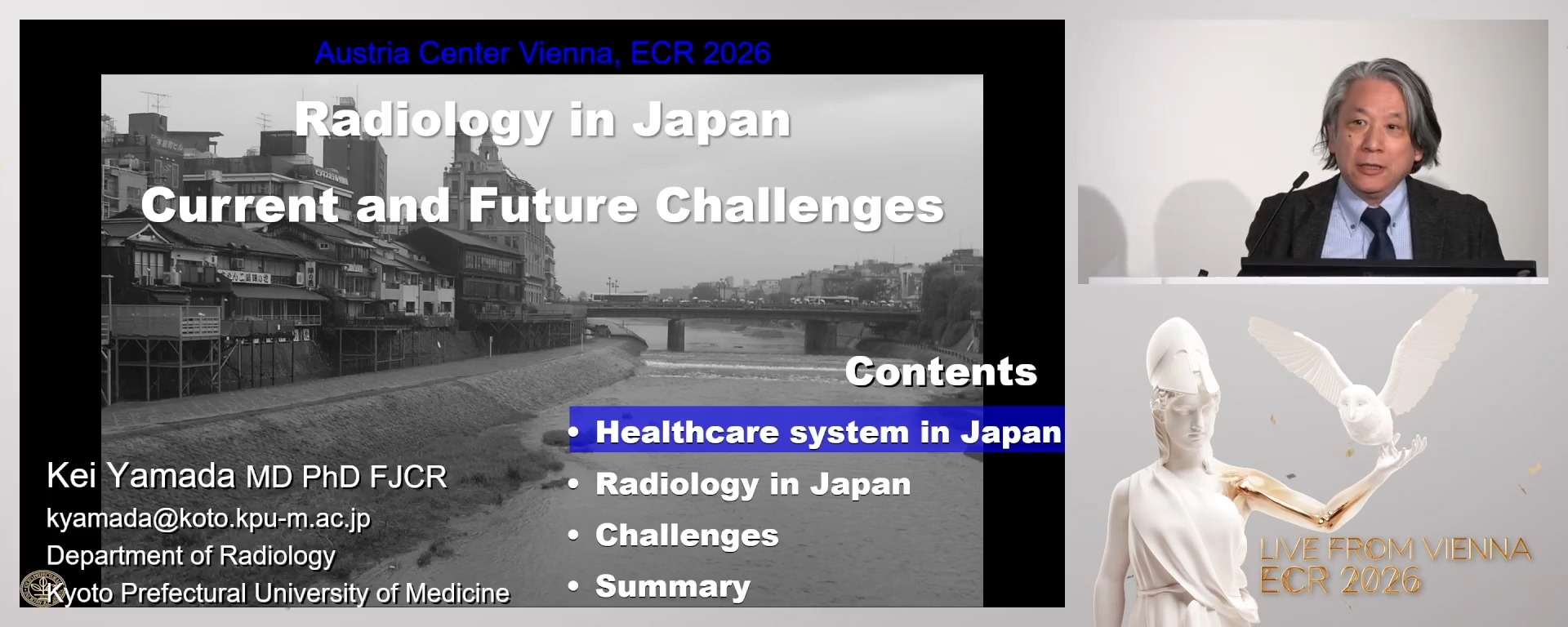
Radiology in Japan: current and future challenges
10:00Kei Yamada, Kyoto / JP
3
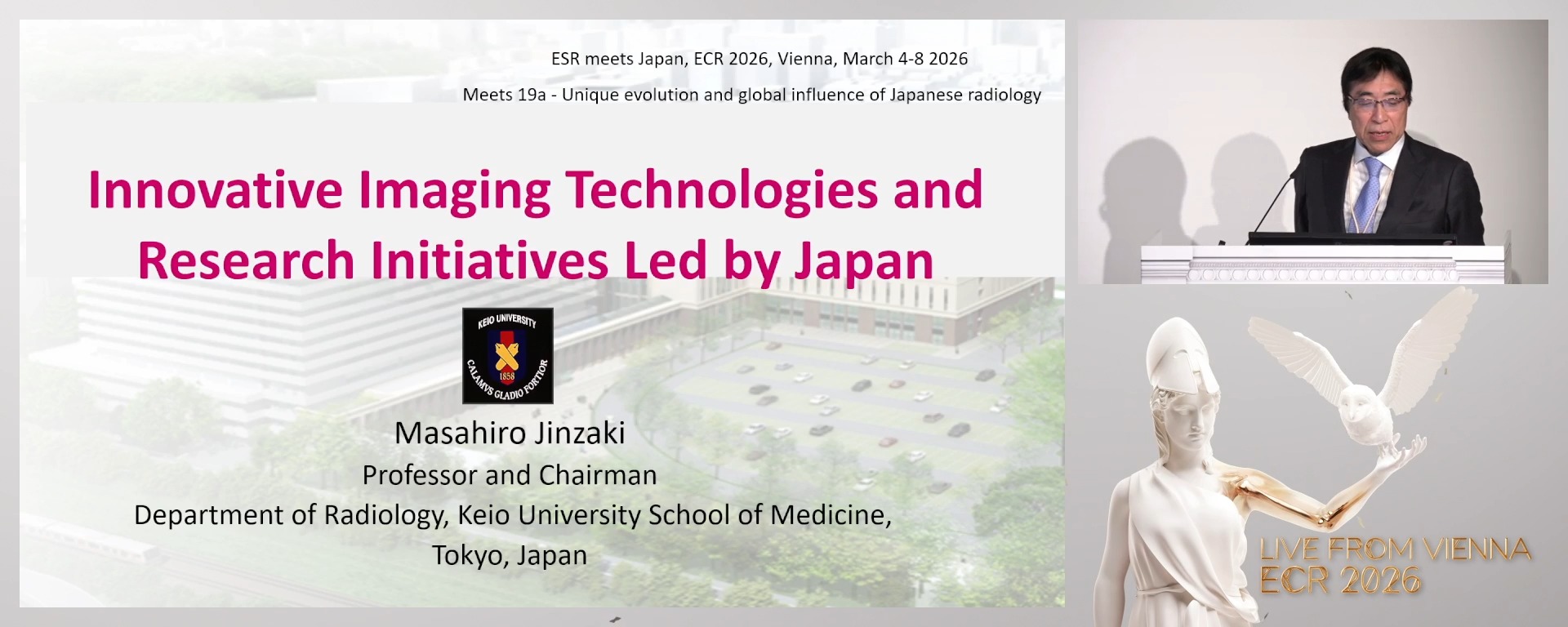
Innovative imaging technologies and research initiatives led by Japan
10:00Masahiro Jinzaki, Tokyo / JP
4
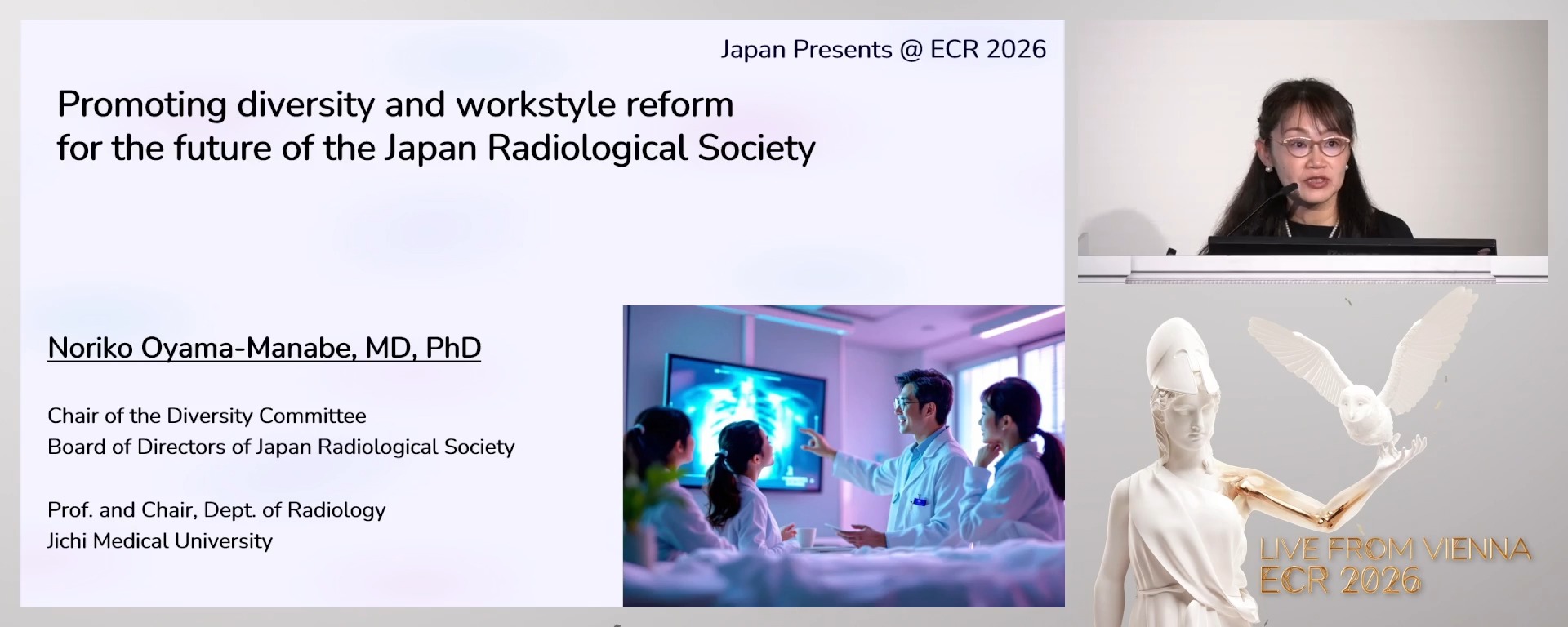
Promoting diversity and workstyle reform for the future of the Japan Radiological Society
10:00Noriko Oyama-Manabe, Saitama / JP
5
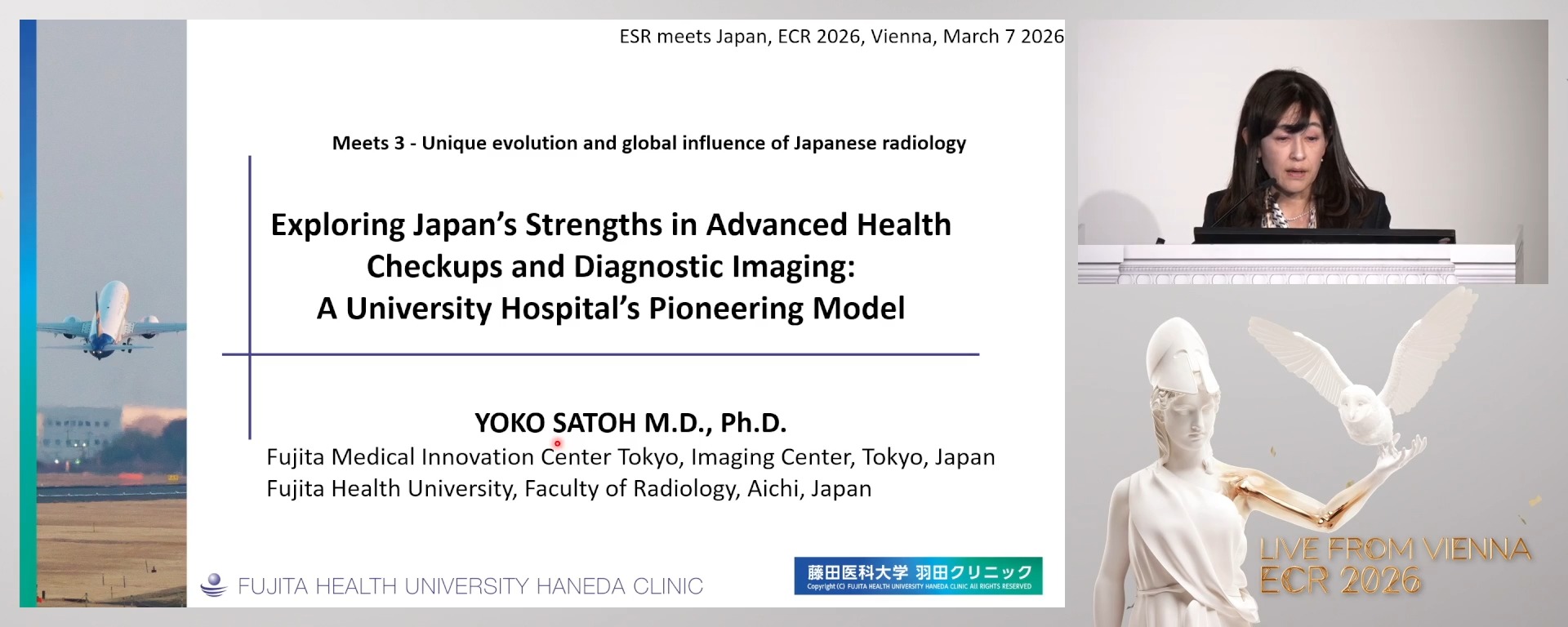
Exploring Japan’s strengths in advanced health checkups and diagnostic imaging: a university hospital’s pioneering model
10:00Yoko Satoh, Tokyo / JP
6
Panel discussion: What should a radiology society do to support radiologists?
18:00Noriyuki Tomiyama, Suita / JP
2 min
Chairpersons' introduction
Minerva Becker, Geneva / Switzerland
Takamichi Murakami, Kobe / Japan
Noriyuki Tomiyama, Suita / Japan
Takamichi Murakami, Kobe / Japan
Noriyuki Tomiyama, Suita / Japan
10 min
Radiology in Japan: current and future challenges
Kei Yamada, Kyoto / Japan
- To describe the current problems in radiology, including but not limited to the manpower shortage.
- To analyse the current difficulties and future threats we face in the field of radiology.
- To solve your problems that could emerge in the future in your own medical system.
10 min
Innovative imaging technologies and research initiatives led by Japan
Masahiro Jinzaki, Tokyo / Japan
- To understand two unique features of the radiology-related environment in Japan: the high concentration of imaging-related companies that facilitate academia-industry collaboration and the widespread implementation of preventive health check-up systems.
- To appreciate technologies and methods originally developed and led by Japan.
- To learn about cutting-edge research that has not originated in Japan but is currently led by Japanese initiatives.
10 min
Promoting diversity and workstyle reform for the future of the Japan Radiological Society
Noriko Oyama-Manabe, Saitama / Japan
- To understand the society’s comprehensive approach to addressing workforce sustainability, such as promoting task-shifting to radiological technologists, supporting childcare, and encouraging parental leave among younger radiologists as part of a long-term vision for a more inclusive and resilient radiology workforce.
- To appreciate programs designed to support and empower early-career radiologists, including the "Under 40" network and the early-career researchers support program.
- To learn about the Japan Radiological Society’s diversity promotion efforts as a foundation for these initiatives, including the introduction of a gender quota system in delegate and board member elections as part of ist strategic action plan.
10 min
Exploring Japan’s strengths in advanced health checkups and diagnostic imaging: a university hospital’s pioneering model
Yoko Satoh, Tokyo / Japan
- To learn how universal health coverage under public insurance in Japan has made high-quality medical care widely accessible at low cost, while also recognising its limitations, such as increased workloads for radiologists and fixed pricing that does not reflect differences in diagnostic quality. A response to these challenges has been initiated, with advanced services currently being offered mainly to international patients.
- To appreciate a pioneering effort by a Japanese university hospital, which established a fully self-pay satellite clinic near Tokyo International Airport to provide advanced care with convenient access from various Asian countries.
- To understand how concierge-style imaging services, including personalised consultations and tailored exam planning, are provided for patients with high expectations for medical quality and service, both from abroad and within Japan.
18 min
Panel discussion: What should a radiology society do to support radiologists?
Noriyuki Tomiyama, Suita / Japan