Swiss Societies Session
SW - The Swiss army knife of radiology: solutions for clinical challenges
Lectures
1
Chairperson's introduction
02:00Sebastian Schindera, Aarau / CH
2
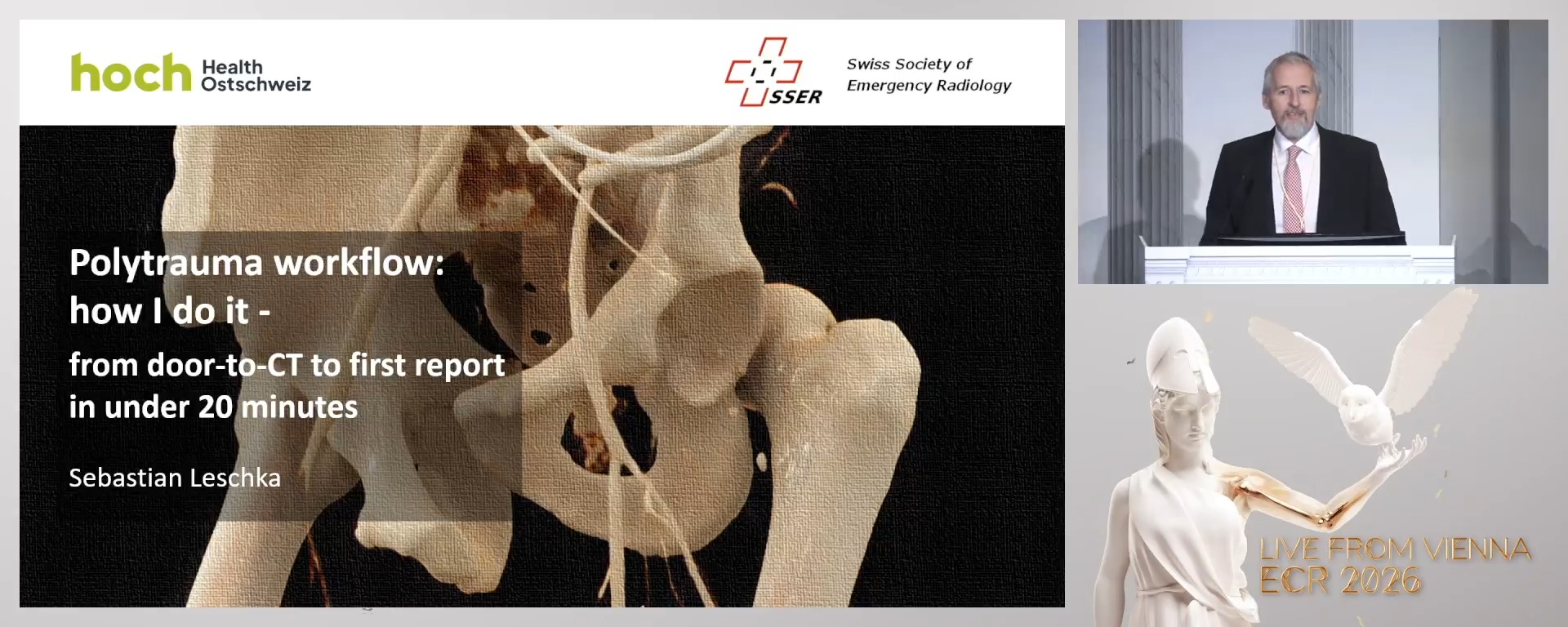
Polytrauma workflow: how I do it - from door-to-CT to first report in under 20 minutes
13:00Sebastian Leschka, St. Gallen / CH
3

Stop the bleeding: how I do it - quick and safe embolisation techniques for lower GI bleeding
13:00Christoph Johannes Zech, Basel / CH
4
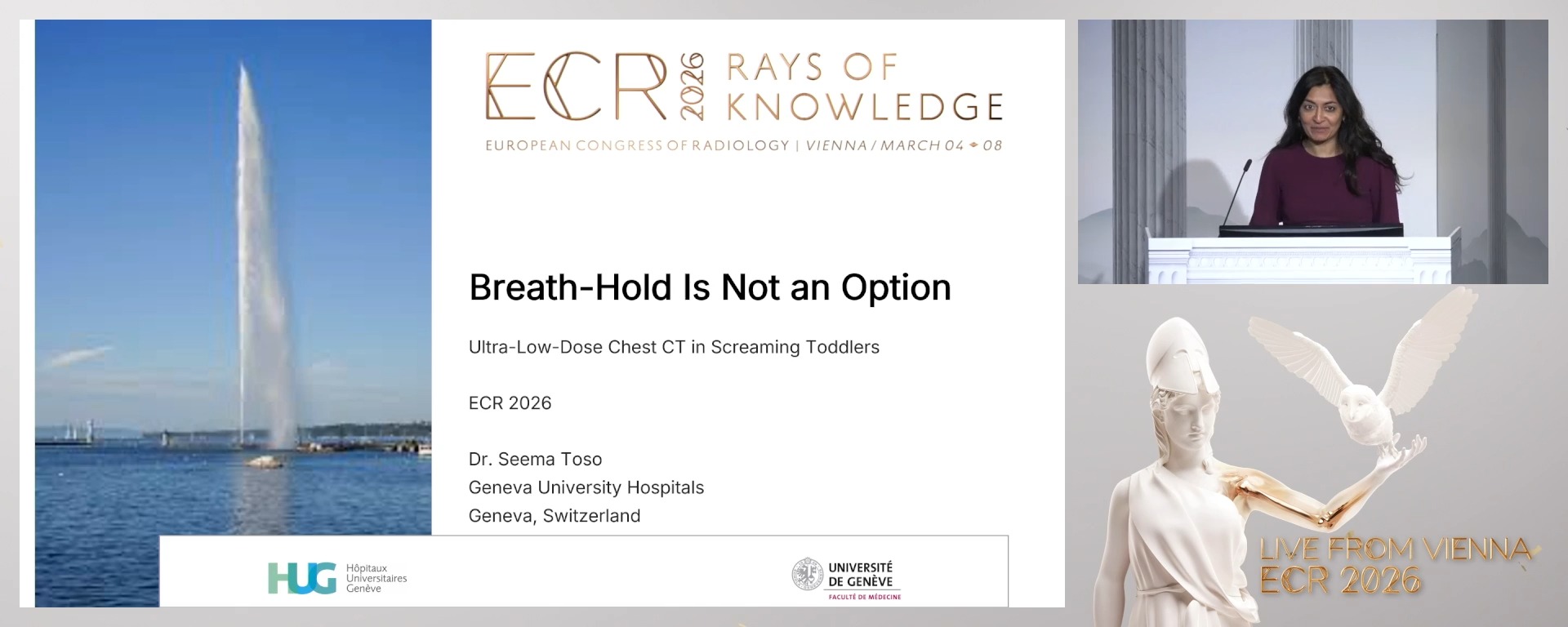
Breath-hold is not an option: how I do it - ultra-low-dose chest CT in screaming toddlers
13:00Seema Toso, Geneva / CH
5
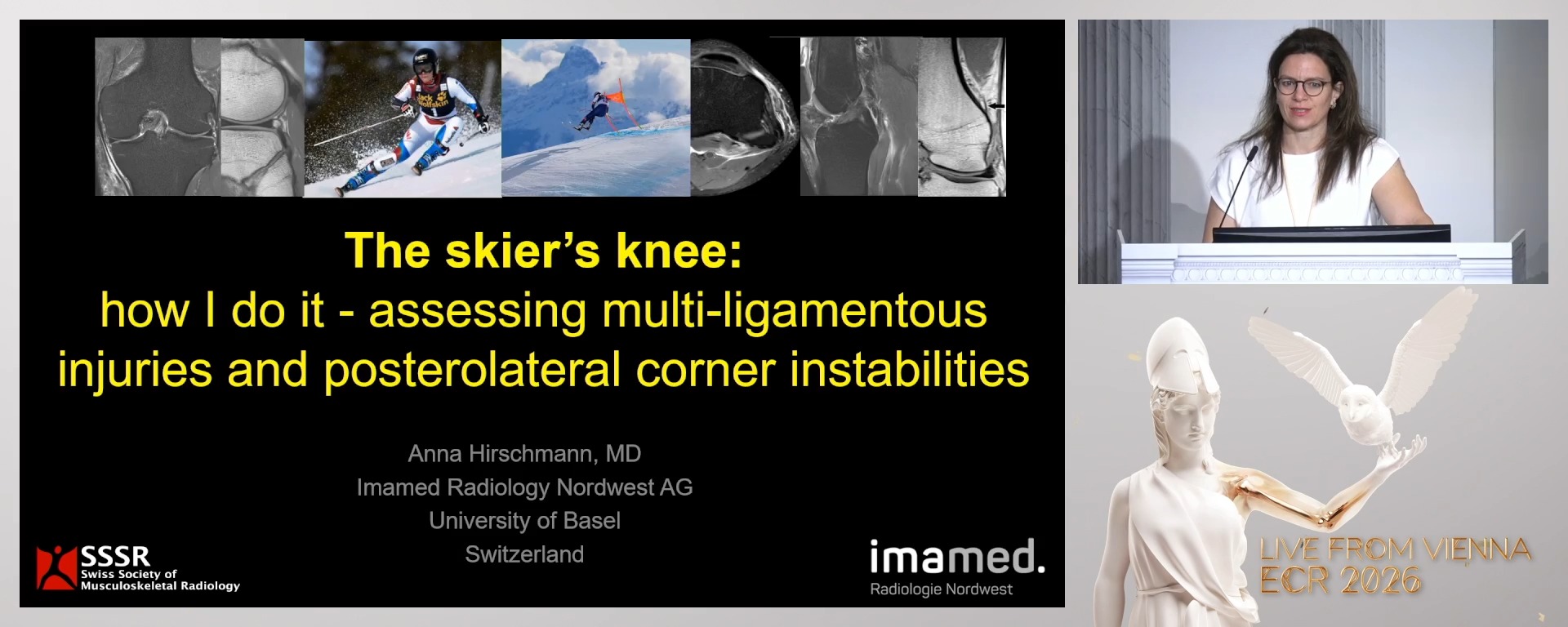
The skier’s knee: how I do it - assessing multi-ligamentous injuries and posterolateral corner instabilities
13:00Anna Hirschmann, Basel / CH
2 min
Chairperson's introduction
Sebastian Schindera, Aarau / Switzerland
13 min
Polytrauma workflow: how I do it - from door-to-CT to first report in under 20 minutes
Sebastian Leschka, St. Gallen / Switzerland
- To implement standardised patient positioning and optimised contrast protocols that significantly reduce "door-to-image" time without compromising diagnostic quality.
- To apply a systematic, prioritised search pattern to rapidly identify and grade life-threatening injuries.
- To utilise structured reporting templates for the immediate communication of critical findings.
13 min
Stop the bleeding: how I do it - quick and safe embolisation techniques for lower GI bleeding
Christoph Johannes Zech, Basel / Switzerland
- To learn about the vascular anatomy of the mesenteric artery and how to best prepare for the procedure.
- To be aware of catheters and wires to probe also distant mesenteric artery branches.
- To learn about the different embolic agents and how they can be used to treat GI bleeding.
13 min
Breath-hold is not an option: how I do it - ultra-low-dose chest CT in screaming toddlers
Seema Toso, Geneva / Switzerland
- To explain when CT is justified in paediatric chest emergencies and how to minimise radiation exposure.
- To review free-breathing and motion-robust CT protocols for non-cooperative children.
- To learn how to report time-critical findings for rapid emergency decision-making.
13 min
The skier’s knee: how I do it - assessing multi-ligamentous injuries and posterolateral corner instabilities
Anna Hirschmann, Basel / Switzerland
- To describe the normal anatomy and MRI appearances of the knee ligaments and the posterolateral corner structures.
- To explain typical imaging findings of multiligamentous injuries and posterolateral corner injuries.
- To learn how to report complex knee injuries in daily practice.
6 min
Question and answers