Refresher Course: Emergency Imaging
RC 717 - Genital emergencies, a rapid refresher rally
Lectures
1
Chairperson's introduction
02:00Lina Padervinskiene, Kaunas / LT
2
Ovarian torsion: twists and turns in pelvic pain
08:00Nikolaos Achilleas Arkoudis, Athens / GR
3
Pelvic inflammatory disease and tubo-ovarian abscess: imaging clues and complications
08:00Ana Blanco Barrio, Murcia / ES
4
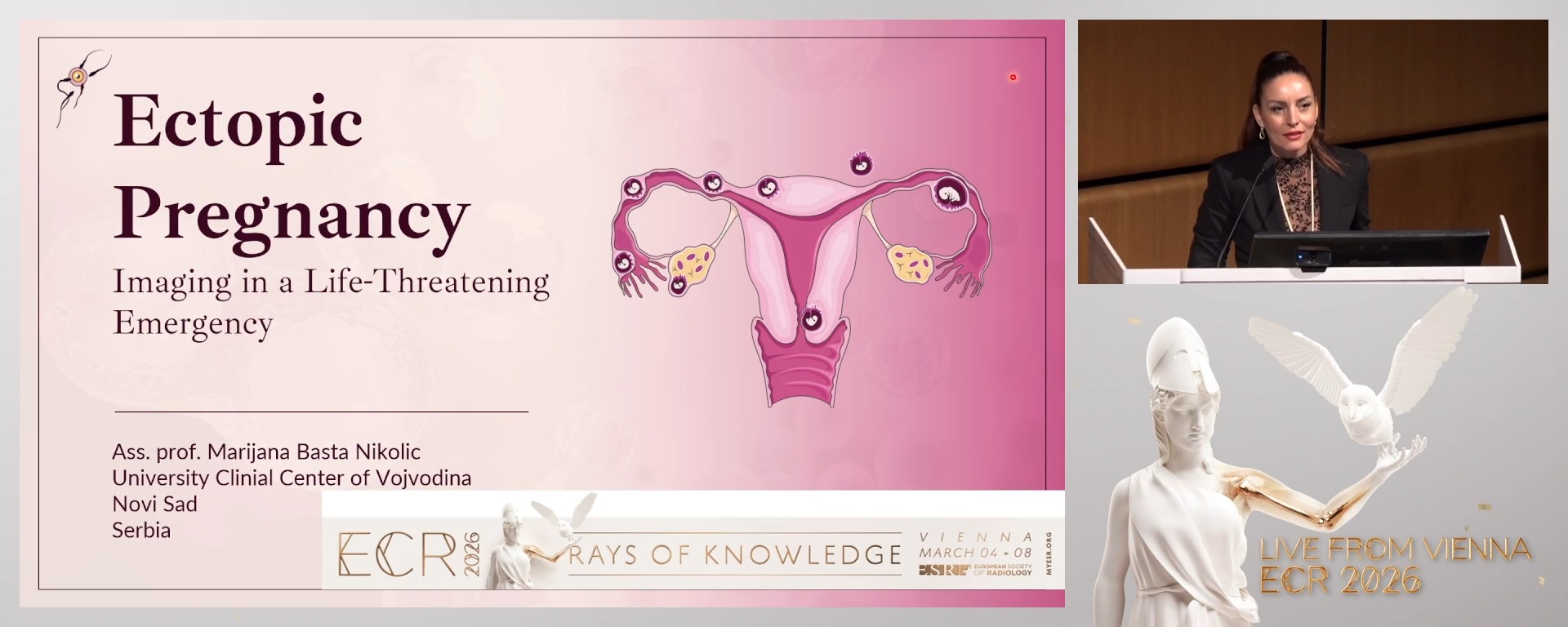
Ectopic pregnancy: imaging in a life-threatening emergency
08:00Marijana Basta Nikolic, Novi Sad / RS
5
Postpartum and post-cesarean emergencies
08:00Elizabeth Dick, London / UK
6
Acute scrotum: testicular torsion and beyond
08:00Karolina Markiet, Gdańsk / PL
7
Penile trauma and other emergencies of the penis
08:00DINESH D CHINCHURE, Singapore / SG
2 min
Chairperson's introduction
Lina Padervinskiene, Kaunas / Lithuania
8 min
Ovarian torsion: twists and turns in pelvic pain
Nikolaos Achilleas Arkoudis, Athens / Greece
- To identify key imaging findings of ovarian torsion across ultrasound, CT, and MRI modalities to enhance diagnostic accuracy.
- To differentiate ovarian torsion from other causes of acute pelvic pain, such as ectopic pregnancy, pelvic inflammatory disease, and ruptured ovarian cysts, using imaging features and clinical context.
- To review imaging-based decision-making pathways to guide timely surgical management and improve patient outcomes.
8 min
Pelvic inflammatory disease and tubo-ovarian abscess: imaging clues and complications
Ana Blanco Barrio, Murcia / Spain
- To analyse the spectrum of imaging findings in pelvic inflammatory disease (PID) and tubo-ovarian abscess (TOA) using ultrasound, CT, and MRI.
- To distinguish imaging features that differentiate complicated PID and TOA from mimickers such as malignancy or endometriosis.
- To evaluate imaging-driven management strategies and identify potential complications requiring urgent intervention.
8 min
Ectopic pregnancy: imaging in a life-threatening emergency
Marijana Basta Nikolic, Novi Sad / Serbia
- To identify typical and atypical imaging features of ectopic pregnancy using ultrasound, CT, and MRI.
- To recognise key imaging findings that help differentiate ectopic pregnancy from other pelvic emergencies.
- To understand the role of imaging in guiding urgent management and improving patient outcomes.
8 min
Postpartum and post-cesarean emergencies
Elizabeth Dick, London / United Kingdom
- To recognise the spectrum of imaging findings in common postpartum and post-cesarean complications.
- To differentiate regular postoperative changes from pathological conditions using ultrasound, CT, and MRI.
- To guide clinical management by identifying imaging signs of life-threatening postpartum emergencies, such as haemorrhage, infection, and uterine rupture.
8 min
Acute scrotum: testicular torsion and beyond
Karolina Markiet, Gdańsk / Poland
- To identify the critical imaging features of testicular torsion and other causes of acute scrotal pain using ultrasound and Doppler evaluation.
- To differentiate between surgical and non-surgical causes of acute scrotum based on imaging findings.
- To recognise imaging pitfalls and atypical presentations that can delay diagnosis and impact patient outcomes.
8 min
Penile trauma and other emergencies of the penis
DINESH D CHINCHURE, Singapore / Singapore
- To describe the imaging features of common penile emergencies, including fracture, priapism, and vascular injuries.
- To differentiate between true penile fracture and other causes of penile trauma using ultrasound and MRI.
- To understand the role o
10 min
Q&A