E³ - Advanced Course: Reporting and Data Systems (RADS): from Head to Toe
E³ 2319 - Genitourinary reporting and data systems (RADS): moving PI-RADS, VI-RADS, KI-RADS forward
Lectures
1

Chairperson's introduction
05:00Davide Prezzi, London / UK
2

Prostate imaging-reporting and data system (PI-RADS): what next?
20:00Francesco Giganti, London / UK
3

Vesical imaging-reporting and data system (VI-RADS): new developments
20:00Martina Pecoraro, Rome / IT
4
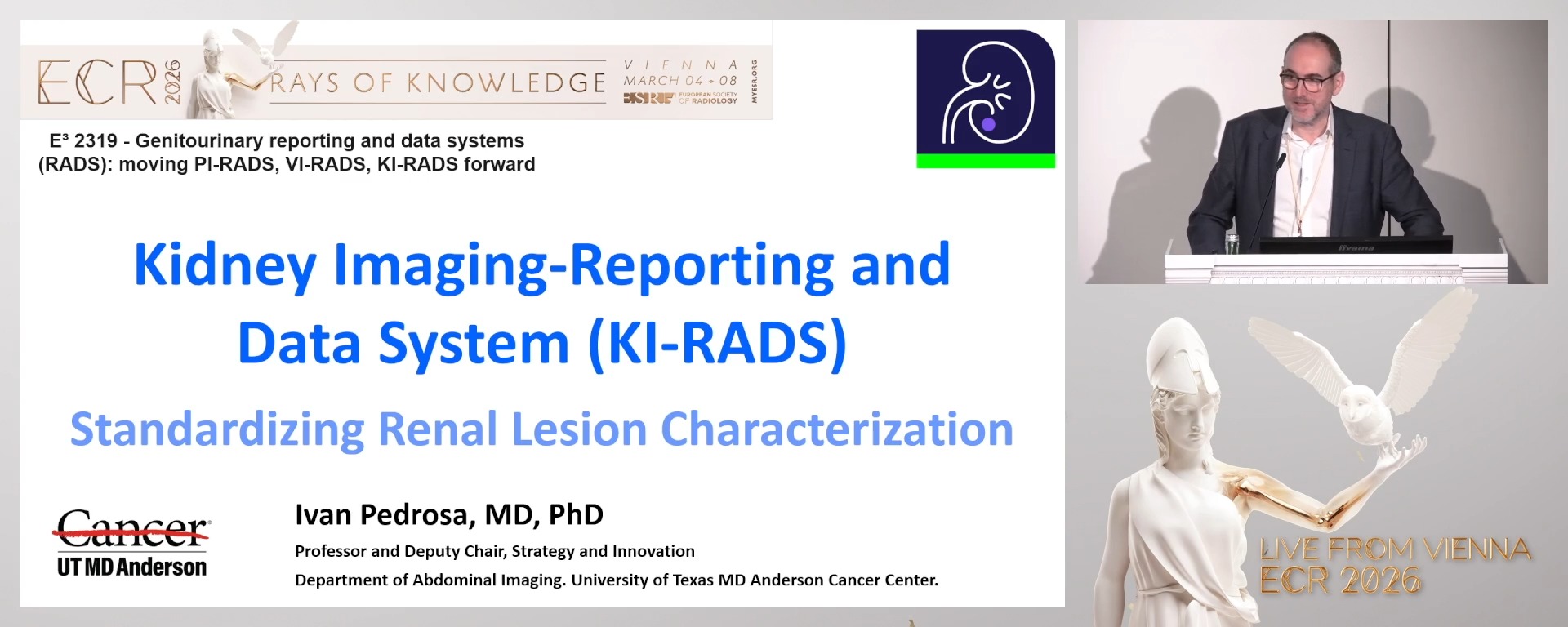
Kidney imaging-reporting and data system (KI-RADS): standardising renal lesion characterisation
20:00Ivan Pedrosa, Dallas / US
5

Panel discussion: How can we improve the use of reporting and data systems (RADS) in routine practice? All speakers and
25:00Erik Briers, Hasselt / BE
5 min
Chairperson's introduction
Davide Prezzi, London / United Kingdom
20 min
Prostate imaging-reporting and data system (PI-RADS): what next?
Francesco Giganti, London / United Kingdom
- To describe the natural history and management of prostate cancer.
- To describe the current status of PI-RADS for diagnosis of clinically significant prostate cancer.
- To highlight knowledge gaps and next steps for PI-RADS.
20 min
Vesical imaging-reporting and data system (VI-RADS): new developments
Martina Pecoraro, Rome / Italy
- To describe the natural history and management of bladder cancer.
- To describe the current status of VI-RADS for diagnosis of muscle-invasive bladder cancer.
- To highlight knowledge gaps and next steps for VI-RADS.
20 min
Kidney imaging-reporting and data system (KI-RADS): standardising renal lesion characterisation
Ivan Pedrosa, Dallas / United States
- To understand the rationale for developing KI-RADS.
- To appreciate the current evidence base for KI-RADS.
- To appreciate the potential for KI-RADS for characterising renal lesions.
25 min
Panel discussion: How can we improve the use of reporting and data systems (RADS) in routine practice?
All speakers and
All speakers and
Erik Briers, Hasselt / Belgium