Refresher Course: Abdominal and Gastrointestinal
RC 201 - Preneoplastic lesions in hepato-pancreato-biliary (HPB) system: see and wait?
Lectures
1
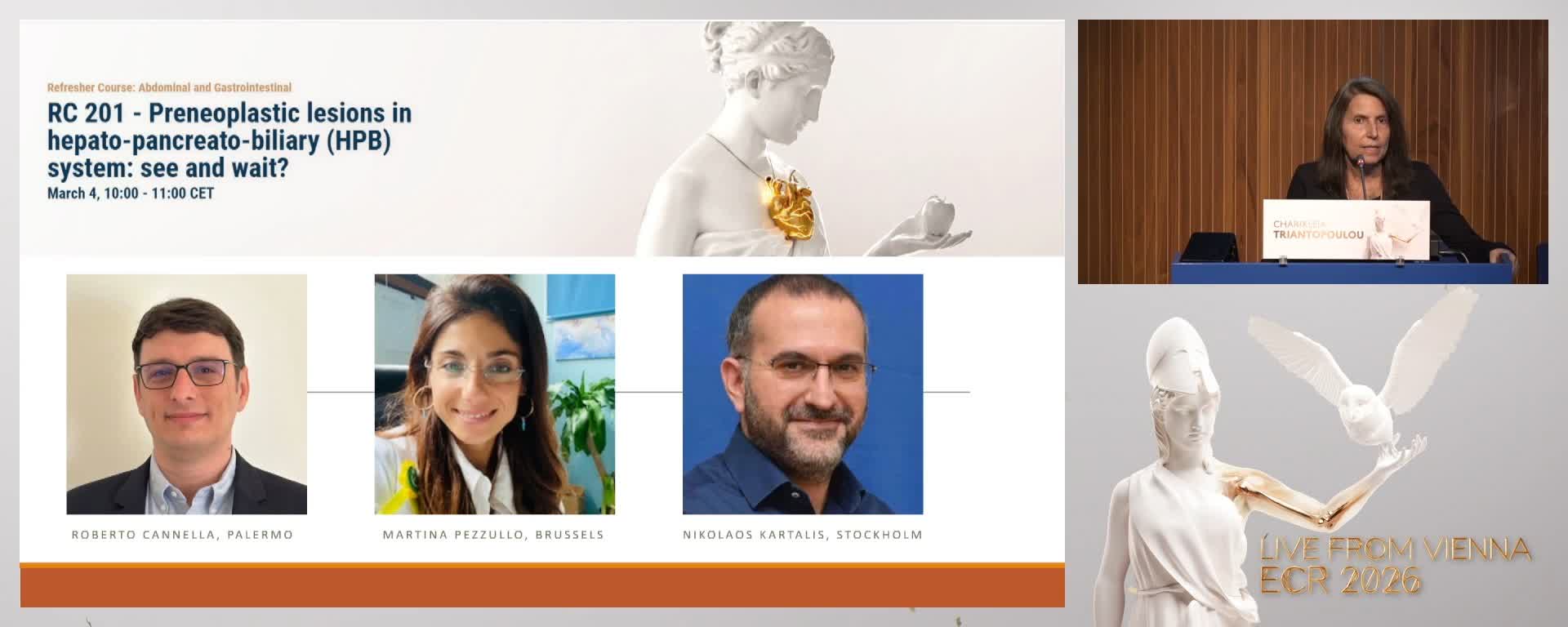
Chairperson's introduction
03:00Charikleia Triantopoulou, Athens / GR
2
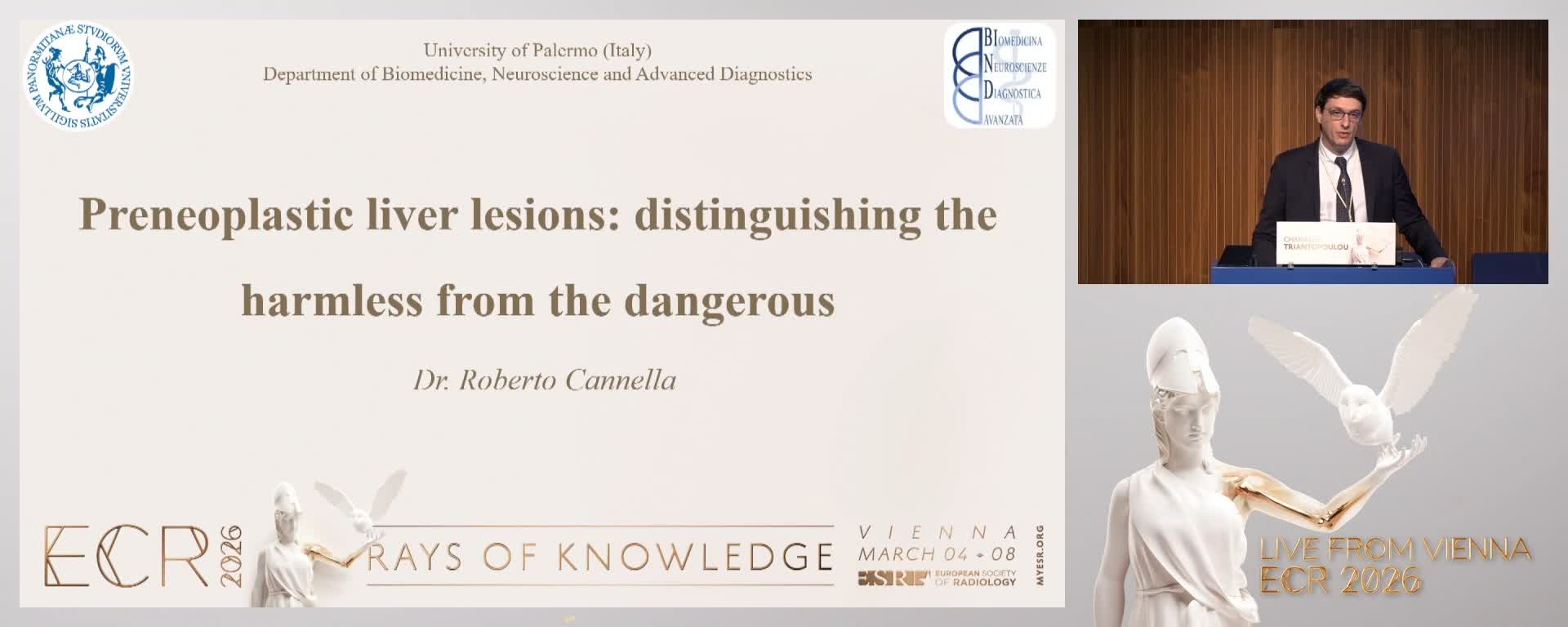
Preneoplastic liver lesions: distinguishing the harmless from the dangerous
15:00Roberto Cannella, Palermo / IT
3
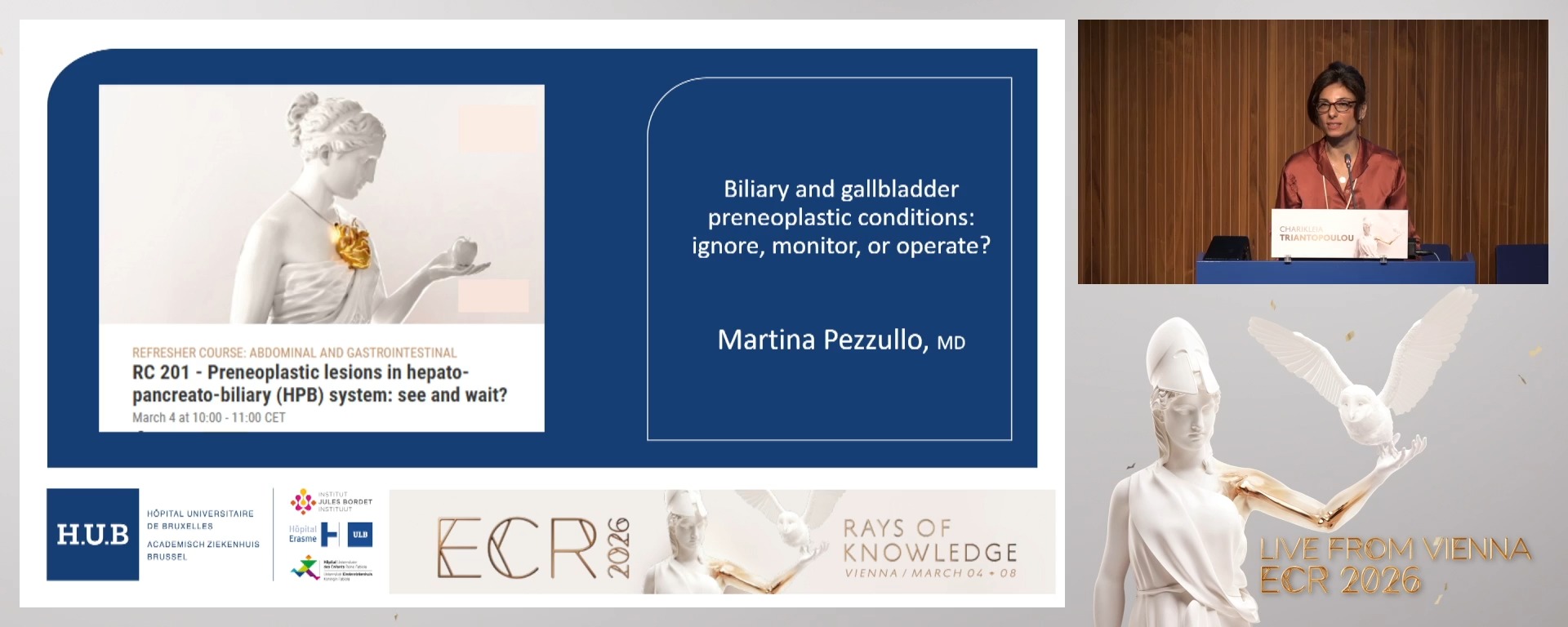
Biliary and gallbladder preneoplastic conditions: ignore, monitor, or operate?
15:00Martina Pezzullo, Brussels / BE
4
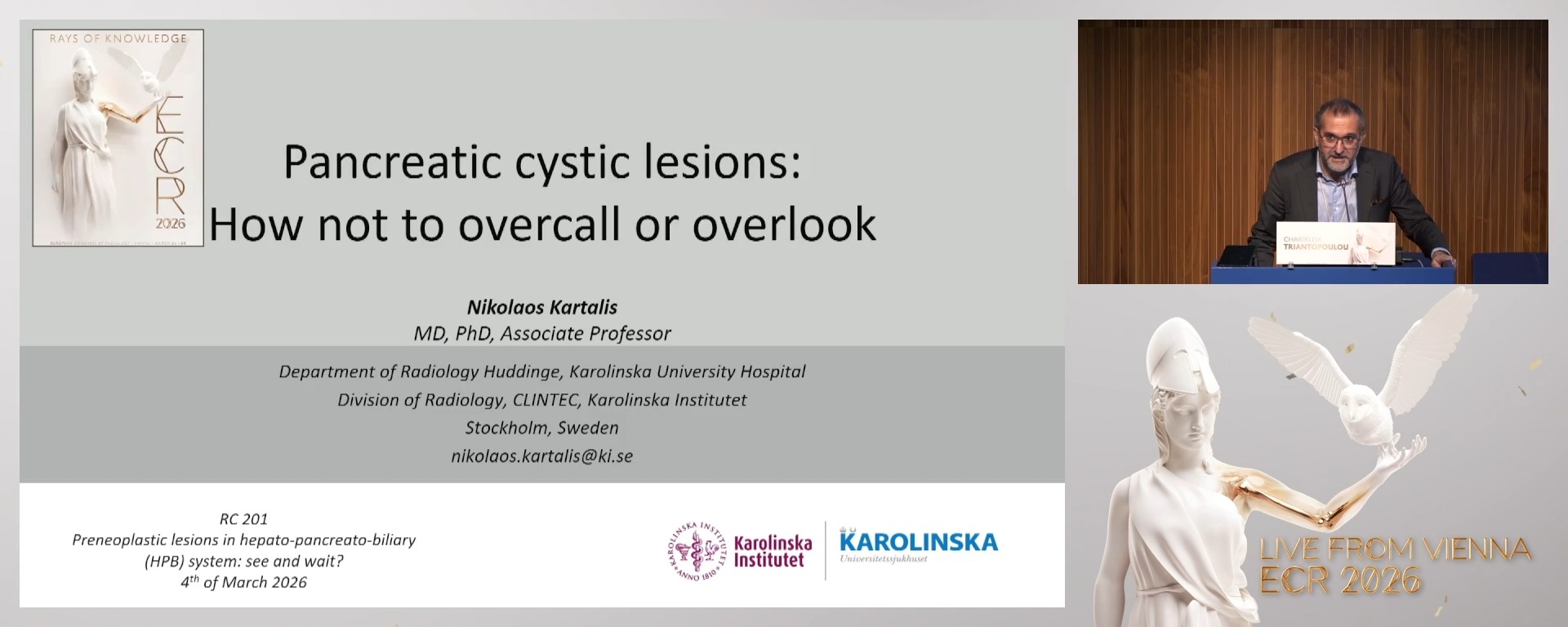
Pancreatic cystic lesions: how not to overcall or overlook
15:00Nikolaos Kartalis, Stockholm / SE
5

Panel discussion: How to share knowledge and responsibility in multidisciplinary teams
12:00Panel discussion: How to share knowledge and responsibility in multidisciplinary teams
3 min
Chairperson's introduction
Charikleia Triantopoulou, Athens / Greece
15 min
Preneoplastic liver lesions: distinguishing the harmless from the dangerous
Roberto Cannella, Palermo / Italy
- To review the imaging features of regenerative and dysplastic nodules in cirrhosis.
- To identify risk factors and imaging signs of progression to hepatocellular carcinoma.
- To propose imaging follow-up strategies and thresholds for intervention.
15 min
Biliary and gallbladder preneoplastic conditions: ignore, monitor, or operate?
Martina Pezzullo, Brussels / Belgium
- To understand the imaging spectrum of biliary intraepithelial neoplasia (BilIN), intraductal papillary neoplasm of the bile duct (IPNB), and gallbladder polyps.
- To learn size, morphology, and enhancement features that raise concern.
- To align radiological findings with surgical and oncologic decision-making.
15 min
Pancreatic cystic lesions: how not to overcall or overlook
Nikolaos Kartalis, Stockholm / Sweden
- To differentiate between intraductal papillary mucinous neoplasm (IPMN), mucinous cystic neoplasm (MCN), and other cystic lesions based on imaging criteria.
- To apply risk stratification systems and guidelines.
- To outline practical surveillance intervals and indications for resection.
12 min
Panel discussion: How to share knowledge and responsibility in multidisciplinary teams